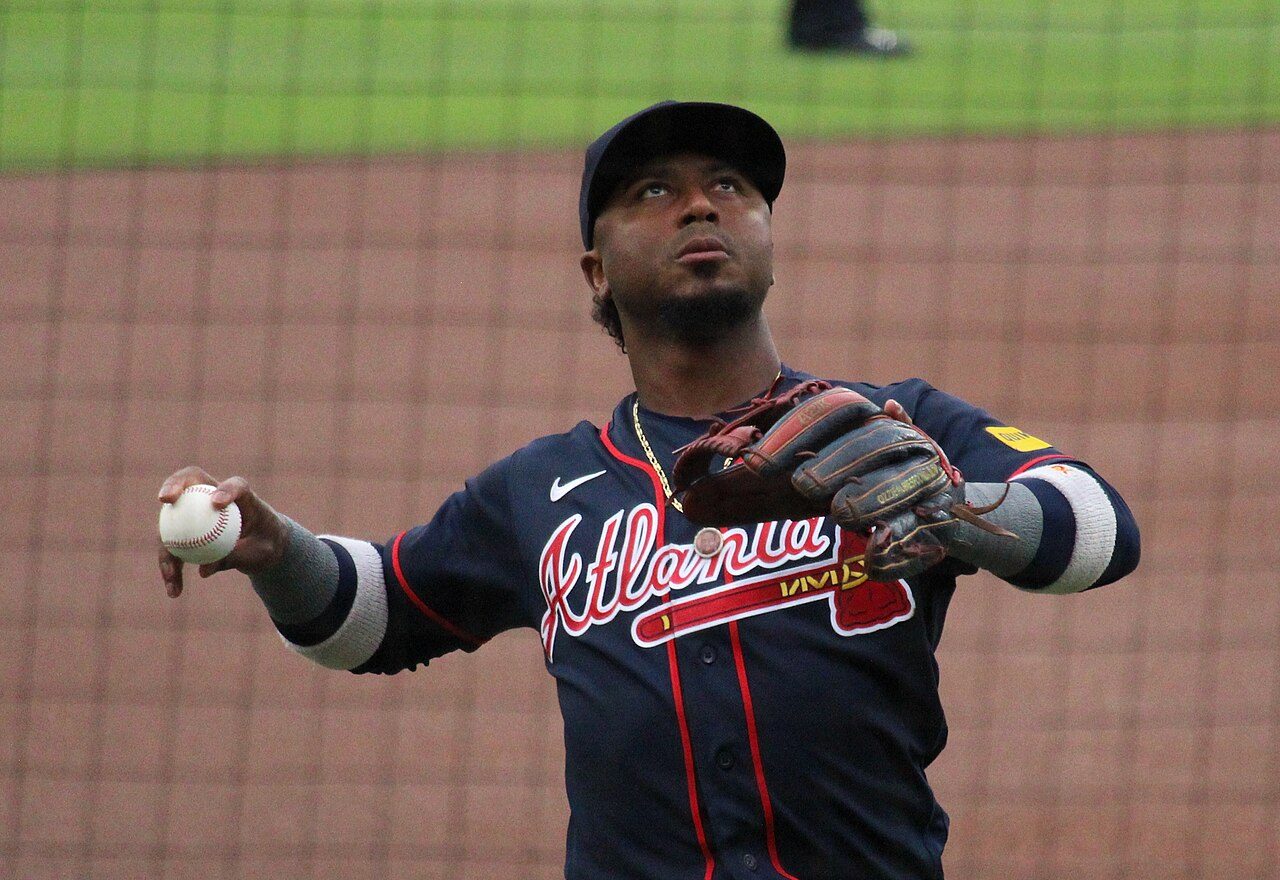
At 5-foot-7, Ozzie Albies does not fit the old stereotype of a power-hitting infielder. Yet from the moment he arrived in Atlanta in the summer of 2017, he brought more than quick feet and energy. He brought impact. Over time, the switch-hitting second baseman from Curaçao grew into one of the Braves’ central pieces, a player whose game blended bat speed, range, pop and a knack for making the middle of the diamond feel busy.
Born Ozhaino Jurdy Jiandro Albies in Willemstad, Curaçao, on January 7, 1997, he came from an island with an outsized baseball footprint. Curaçao has produced a steady run of big leaguers, and Albies joined that line when he reached the majors with Atlanta on August 1, 2017. By then, the Braves already knew they had something more than a promising athlete. They had a player who moved quickly, learned quickly and played with a style that stood out.
From Willemstad to the Braves system
Albies started playing baseball as a child in Curaçao, where the game is woven into daily life and local identity. He did not take the college route. Instead, he signed with the Atlanta Braves as an international free agent on July 2, 2013, reportedly for a $350,000 bonus, and began his climb through the organization while still in his teens.
That climb was fast.
He played in the rookie levels in 2014 with the Gulf Coast Braves and Danville, then moved to Class A Rome in 2015. Prospect watchers took notice early. Keith Law ranked him among baseball’s top prospects after the 2014 season, and Albies appeared in the 2015 All-Star Futures Game, a useful marker for how highly Atlanta viewed him. He was still slight in build, but scouts and coaches saw a switch-hitter with speed, feel for contact and the kind of athleticism that gave him room to grow.
By 2016, he had reached Double-A Mississippi and Triple-A Gwinnett. There was a setback that year when he fractured his right elbow during the Southern League playoffs, but it did little to change the Braves’ long-term view. Shortstop had been part of his path in the minors, though second base would become his main home in the majors.
A quick arrival in Atlanta
The Braves called him up on August 1, 2017, and Albies wasted little time looking comfortable. He was young, lively and aggressive, and he immediately gave Atlanta another dimension at the top and middle of the lineup. His game was never just about speed, even if that was the first thing many people noticed. He could drive the ball, switch-hit effectively and turn routine plays at second into momentum plays.
His first full season, in 2018, showed how broad his value could be. Albies made the All-Star team and finished the year with 24 home runs, 72 RBI and 14 stolen bases. For a middle infielder his age, that was a loud statement. He was not simply filling a lineup spot. He was becoming part of the Braves’ core.
The next step came in 2019. Albies hit .295 with 24 home runs, 86 RBI and 15 steals, and he won the Silver Slugger Award at second base. That same spring, on April 11, 2019, he signed a seven-year, $35 million extension with Atlanta that included club options for 2026 and 2027. The deal became a frequent talking point around the sport because of its team-friendly structure. It is fair to say many analysts viewed it that way. Claims about exactly how much money he “gave up,” or speculation about what his representation should or should not have done, are just that: speculation, not established fact.
The championship year
If one season best captures Albies’ place in Atlanta, it is 2021.
He hit .259 with 30 home runs, 106 RBI, 103 runs scored and 20 stolen bases, becoming the only National League player that year to reach 30 homers, 100 RBI and 100 runs. He made another All-Star team, won a second Silver Slugger and earned All-MLB Second Team honors. He also received the Heart & Hustle Award, which fit the way he played: quick tempo, visible energy, pressure on the bases and steady work in the field.
Then came October.
The Braves won the World Series, and Albies was part of the everyday group that pushed the club through the postseason and past José Altuve and the Houston Astros in six games. He did not need to dominate every headline to matter. On that team, his value was in the constant movement he brought to games, the balance he gave the lineup and the reliability he provided at second base.
Injuries that interrupted, not defined, his career
Like many everyday players, Albies has had stretches where health got in the way.
The first notable one came in the minors with that 2016 elbow fracture. A more frustrating run followed in 2022, when he suffered a fractured left foot, returned, and then fractured his right pinkie finger. Those injuries limited him to 64 major league games that season and interrupted what had otherwise become a pattern of regular availability.
He bounced back in 2023 with another All-Star season, hitting .280 with 33 home runs and 109 RBI, one of the strongest offensive years of his career. It was another reminder that his power is not a novelty stat attached to a smaller player. It is a real part of who he is.
In 2024, he remained a regular for Atlanta, though his season was less explosive than his best years. Later, in 2025, a fractured left hamate cut short another campaign. Those interruptions matter in any honest account of his career, but they do not change the larger picture. When healthy, Albies has been one of the more productive second basemen of his era.
What makes Ozzie Albies unusual
There have been plenty of speedy infielders. There have been plenty of switch-hitters. What makes Ozzie Albies stand out is the combination.
He is listed at 5-foot-7 and 165 pounds, bats from both sides, throws right-handed and has spent most of his big league life at second base. He can still pressure a defense with his legs, but the surprise in his profile has long been the power. He has produced multiple 20-home-run seasons, something not commonly associated with second basemen of his size. That power, paired with his ability to hit from both sides and stay involved in every phase of the game, is what turned him from an exciting young player into a fixture in Atlanta.
Defensively, he has brought range, quick hands and comfort around the bag on double plays. Offensively, he has often been at his best when he is driving the ball with intent rather than trying to do too much. His game works because it is layered. He can score from first, yank a ball into the seats, shoot a line drive from the other side of the plate, or change an inning with a turn at second.
Life away from the field
The off-field side of Albies’ story is more personal and more distinctive than the standard athlete profile.
His father, Osgarry Albies, died in 2013 after a heart attack, a loss that came around the same time Ozzie was beginning his professional career. His mother is Judari Albies, and he has spoken over the years about family responsibility and the support system behind him. Public reports have also identified his siblings, including a younger brother and a sister.
Albies is multilingual, speaking English, Spanish, Dutch and Papiamento. That part of his background says a lot about both Curaçao and the adaptability required of a teenager leaving home to chase professional baseball.
Then there is the hobby that makes almost every profile on him take a turn: fishkeeping. Albies has spoken about keeping hundreds of freshwater fish at home in multiple tanks and a pond, an interest tied to memories of his grandfather’s koi pond in Curaçao. It is a detail that sounds almost too specific to be true until he starts talking about it. He has shared that side of his life publicly, including through social media, and it offers a glimpse of a player with a very different rhythm away from the field.
He has also been involved in animal rescue and community work, according to public reporting, and has had endorsement deals with a range of brands. As with many active players, sponsorship lists can change over time, so those partnerships are best understood as part of a period rather than a permanent ledger.
The shape of his Braves career
The broad outline is clear. Albies signed young, rose fast, debuted early and became a long-term Atlanta player almost immediately. He made All-Star teams, won Silver Sluggers, helped the Braves win a World Series and built a reputation as one of the game’s more dynamic second basemen.
His story also carries a little more texture than a list of honors suggests. There is the kid from Willemstad who moved quickly through the minors. There is the undersized infielder who developed real home-run power. There is the championship second baseman in Atlanta, and there is the man who goes home to a house full of fish tanks.
That combination is why Ozzie Albies has remained such an easy player to recognize. The game is fast when he is in it.
FAQ
How old is Ozzie Albies?
Ozzie Albies was born on January 7, 1997.
What position does Ozzie Albies play?
He is primarily a second baseman, though he also played shortstop in the minor leagues.
What team does Ozzie Albies play for?
He has played in the majors for the Atlanta Braves.
Has Ozzie Albies won a World Series?
Yes. He was part of Atlanta’s 2021 World Series championship team.
What is Ozzie Albies’ contract?
He signed a seven-year, $35 million extension with the Braves in April 2019, with club options for 2026 and 2027.
Where is Ozzie Albies from?
He was born in Willemstad, Curaçao.
Photo: Reunion, CC BY 4.0, via Wikimedia Commons