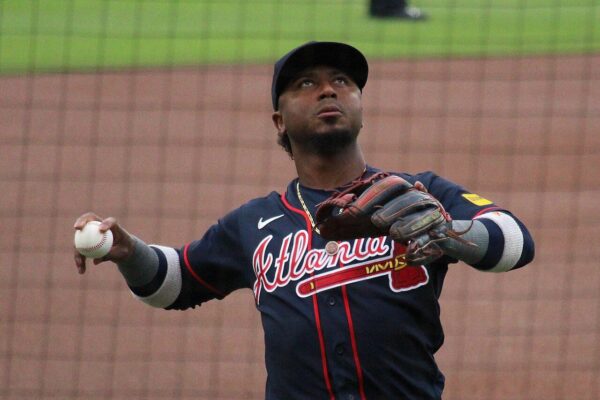
A fourth-round pick who needed only one full minor league season to reach Atlanta, Spencer Strider arrived with the kind of fastball that changes game plans. By the time he had settled into the Braves’ rotation, hitters were already seeing triple digits, a wipeout slider, and strikeout totals that put him in rare company.
From Ohio to Clemson
Spencer Robert Strider was born on October 28, 1998, in Columbus, Ohio, and grew up in Tennessee, where he attended Christian Academy of Knoxville. Before he ever threw a pitch in pro ball, he had already made one notable draft decision: the Cleveland Indians selected him in the 35th round in 2017, 1,052nd overall, but he chose college instead.
That decision sent him to Clemson, where his path was promising, then abruptly difficult. As a freshman, he earned Collegiate Baseball Freshman All-American honors and looked like a pitcher moving quickly in the right direction. Then came Tommy John surgery, which cost him the 2019 season and interrupted the usual climb a young power arm hopes to make.
It also changed the shape of his development. Strider used that lost year to rebuild, and when he returned, he was no longer just a hard thrower with upside. He had become a more polished prospect, one with a serious strikeout profile and a clearer sense of how his stuff played. At Clemson, he also majored in political science, a detail that has long made him stand out a bit from the standard flamethrower template.
Draft day, then a sprint through four levels
Atlanta selected Strider in the fourth round of the 2020 MLB Draft, 126th overall, and signed him for a reported $451,800 bonus. Because the minor league season was wiped out that year, his first real professional test came in 2021. He did not spend much time in any one place.
The Braves sent him to Low-A Augusta, High-A Rome, Double-A Mississippi, and Triple-A Gwinnett in the same season. Across those four stops, he went 3-7 with a 3.64 ERA and 153 strikeouts in 94 innings. The record mattered less than the misses. That many strikeouts in that few innings told the story more clearly than anything else: his stuff was overpowering hitters at every level.
By the end of that season, he had done enough to put himself on Atlanta’s radar for more than depth work. He was part of the organization’s World Series year, though he was not on the postseason roster when the Braves won the title.
Spencer Strider breaks in as a reliever, then takes off as a starter
His major league debut came on October 1, 2021. The bigger turn came the following season.
Atlanta opened 2022 with Strider in the bullpen, a role that fit his power arsenal but did not last long. On May 30, the Braves moved him into the rotation, and the season changed for him almost immediately. He finished 11-5 with a 2.67 ERA and 202 strikeouts in 131 2/3 innings, numbers that made him one of the most dangerous young pitchers in the league.
The strikeout pace was historic. Strider set the major league rookie record for strikeouts per nine innings by a pitcher with at least 100 innings, at 13.8. He also became the first pitcher in MLB history to record at least 200 strikeouts while allowing fewer than 100 hits in the same season. For a pitcher still early in his first full year, that was a startling line.
There were other markers of how quickly he had changed Atlanta’s plans. He became the first Braves rookie to win 10 games since Julio Teheran in 2013, and he was named National League Rookie of the Month for July. By October, the club had seen enough to commit long term.
On October 10, 2022, the Braves signed him to a six-year, $75 million extension covering the 2023 through 2028 seasons. The deal also included a $22 million club option for 2029 with a $5 million buyout, giving it a maximum value of $92 million over seven years.
An All-Star season and the strikeout crown
If 2022 introduced him to a wider audience, 2023 established that the breakout was real. Strider made the National League All-Star team and finished the season 20-5 with a 3.86 ERA and a major league-leading 281 strikeouts in 186 2/3 innings. He also led the majors in wins.
That season showed the full version of his game. The fastball came in with elite velocity, often touching 100 mph, and the slider gave hitters a second problem that was just as severe. When he got ahead in the count, plate appearances tended to shrink. There was not much room to survive.
He also became easier to spot from the first-base side camera. Before the season, he switched to jersey No. 99, saying the choice was inspired by Rick “Wild Thing” Vaughn, the fictional pitcher from Major League. Add the mustache and his notably powerful lower half, and he had a look that was instantly recognizable without turning him into a caricature.
Injury interruption and the next phase
The next chapter was less smooth. After carrying a heavy workload in 2023, Strider’s momentum was interrupted by injury. He made only two starts in 2024 before suffering damage to the ulnar collateral ligament in his right elbow. He underwent internal brace surgery in April of that season, a significant setback for one of the game’s premier strikeout starters.
That injury matters when telling his story because it reshaped the timeline. Rather than building directly on his All-Star campaign, he had to return to rehab mode, the same kind of reset he had already experienced earlier in his baseball life. Any accounting of Spencer Strider stats has to include that interruption, not just the headline strikeout totals.
Because the supplied biography included several claims tied to later seasons and career totals that cannot be reliably confirmed here and contained inconsistencies, those figures are better left out than repeated inaccurately.
Postseason work
Strider’s postseason record has been a smaller sample and a rougher one than his regular-season line. He was in the Braves organization during the 2021 championship run but was not on the playoff roster, so he did not appear in that World Series title run.
His first postseason start came in the 2022 National League Division Series against Philadelphia. In Game 3, he allowed five runs in 2 1/3 innings. He faced the Phillies again in the 2023 NLDS and started Games 1 and 4. Atlanta lost both games, though his individual work was stronger than the win-loss line suggested: he posted a 2.84 ERA with 15 strikeouts in 12 2/3 innings in that series.
The broader point is simple. In October, he has shown the same swing-and-miss ability, but the results have not yet matched his regular-season dominance over a larger sample.
What makes his pitching work
The outline of Strider’s game is easy to spot, but the effect is harder to handle. He is a right-handed power pitcher whose success is built around a high-octane four-seam fastball and a sharp slider. The fastball can reach triple digits, but velocity alone is not the whole story. The shape of the pitch, and the way it pairs with the slider, is what makes hitters look overmatched.
He also took an unusual route into that role. Many frontline starters build their early major league value through innings accumulation. Strider first showed he could dominate in shorter bursts out of the bullpen, then carried that same bat-missing ability into a starter’s workload. That transition is a big part of why his rise felt so sudden.
The numbers from the minors, his rookie season, and his 2023 campaign all point to the same identity. He misses bats at an elite rate. That is the foundation of everything else.
Off the field: No. 99, a political science major, and a small public footprint
Away from the mound, Strider has kept a relatively light public profile compared with some star players. There is no need to stretch that into mythology. The known details are enough to give him shape.
He studied political science at Clemson, which remains one of the more distinctive notes in his background. He has also spoken publicly about the origin of his No. 99 jersey, tying it to Major League and the Wild Thing character. It is a playful detail, but not an empty one; it fits a pitcher whose on-field style is intense and unmistakable.
As for endorsements, reports have linked him with Nike. Beyond that, the public record on commercial deals is fairly limited. The same caution applies to earnings estimates from third-party sites: those figures can vary by date and methodology, so the most reliable long-term financial marker is still the Braves extension he signed in October 2022.
FAQ
How old is Spencer Strider?
He was born on October 28, 1998.
What team does Spencer Strider play for?
He pitches for the Atlanta Braves.
What number does Spencer Strider wear?
He wears No. 99.
Did Spencer Strider win a World Series?
He was part of the Braves organization in 2021, when Atlanta won the World Series, but he was not on the postseason roster.
Where did Spencer Strider go to college?
He played college baseball at Clemson University.
What is Spencer Strider known for?
He is known for a power fastball, a sharp slider, and elite strikeout rates.