
Three shutout innings at an age when most pitchers have been retired for decades: that is one of the cleanest ways into Satchel Paige’s story. The image from Kansas City in 1965 still holds up, the old master, summoned for one more night, giving the crowd exactly what it came to see. But that late cameo was only the epilogue. Long before Major League Baseball finally opened a door, Paige had already built one of the most traveled, most talked-about careers the sport has known.
From Mobile to the mound
Satchel Paige was born Leroy Robert Paige on July 7, 1906, in Mobile, Alabama. The nickname came early. As a boy, he carried bags at a train station with a pole-and-rope setup, and people started calling him “Satchel.” It stuck so completely that Leroy Paige became a name many fans barely used.
His road into baseball was uneven. At 12, he was sent to the Mount Meigs Industrial School for Negro Children, a reform school near Montgomery, after a shoplifting conviction. He stayed there for several years, and in his own telling that period changed his life. At Mount Meigs, he learned the mechanics of pitching, including the long stride and whip-like delivery that later became his signature.
After his release, he returned to Mobile and pitched for the semipro Mobile Tigers. By the mid-1920s, the raw arm had become a professional one, and Black baseball quickly found room for him.
Satchel Paige in the Negro Leagues
Paige’s Negro Leagues career did not unfold in one neat line. Like many Black stars of the era, he moved between clubs, leagues, barnstorming tours, and winter circuits, following opportunity as much as contract stability.
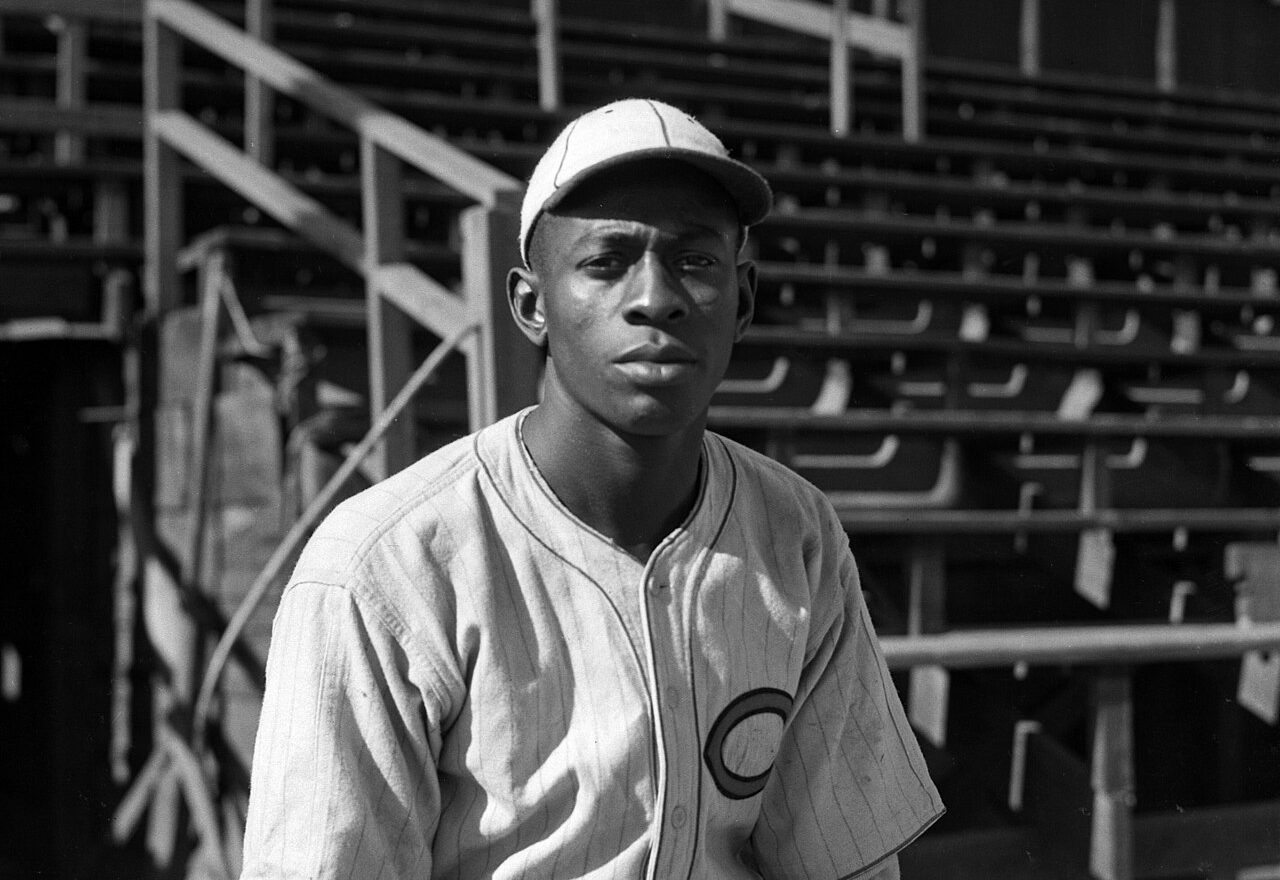
He began with the Chattanooga Black Lookouts in 1926, then joined the Birmingham Black Barons, where he pitched from 1927 into 1930. From there came stops with the Cleveland Cubs and, more importantly, the Pittsburgh Crawfords, one of the great Black teams of the 1930s. He also had several stretches with the Kansas City Monarchs, the club most closely associated with his prime.
That list alone only tells part of it. Paige also pitched in Cuba, the Dominican Republic, Mexico, and Puerto Rico. He was not simply a star in one league; he was a baseball attraction across borders. Owners wanted him because he could win games and fill stands. Fans came for the fastball, the strikeouts, and the theater around them.
His repertoire became part of baseball folklore. Contemporaries described a blazing fastball, excellent control, and a deep mix of off-speed pitches. The famous hesitation pitch, legal in his day, unsettling to hitters, and perfect for his sense of timing, became inseparable from his public image. He was a showman, yes, but the show rested on command. That is why the stories lasted.
The numbers from that period are harder to pin down than modern major league stats. Record-keeping in Black baseball was incomplete, and Paige himself was never shy about telling a good story. He claimed totals such as more than 2,000 wins, 250 shutouts, and 50 no-hitters. Those figures are best treated as part of the legend rather than settled fact. What is documented is that he was one of the dominant pitchers of his era and a regular East-West All-Star Game selection, earning honors multiple times in the 1930s and 1940s.
Fame, friction, and the Monarchs
By the middle of the 1930s, Paige was one of the biggest draws in the sport. That fame came with complications. In 1935, he was suspended by the Negro National League for jumping teams, a reminder of how unstable and loosely organized parts of Black baseball could be. Paige was hardly the only player to move around, but because he was Paige, every move drew attention.
The reputation did not fade. If anything, it grew.
With the Kansas City Monarchs, he remained a headline pitcher into the 1940s. In 1942, he helped the Monarchs win the Negro World Series. One of the best-known stories attached to that run involves Josh Gibson: according to a widely repeated account, Paige loaded the bases on purpose so he could face Gibson, then struck him out. The tale has been retold for decades, though details around many Paige stories can be difficult to verify fully. That uncertainty is part of the Satchel Paige biography as much as any box score. Myth followed him because performance made myth believable.
Breaking into Major League Baseball at 42
When Bill Veeck signed Paige to Cleveland in 1948, it was not a stunt in the simple sense the move is sometimes reduced to. Veeck understood the gate appeal, certainly, but he also believed the veteran right-hander could still help a contender. He was right.
Paige made his MLB debut on July 9, 1948, becoming the oldest rookie in major league history. He was also the first Black pitcher in American League history. In a season and a half with Cleveland, he gave the club useful innings and a calm presence on a pennant winner. In 1948, he went 6-1 with a 2.48 ERA in 21 games.
Cleveland won the World Series that fall, and Paige made another piece of history when he appeared in Game 5 against the Boston Braves, becoming the first Black pitcher to appear in a World Series game. He did not pitch in the Series’ biggest moments, but his place in that championship season was real. The club had added a pitcher who could still get outs, not just a famous name from another baseball world.
He stayed with Cleveland through 1949 before his major league career took another turn.
St. Louis Browns and proof he still belonged
Paige returned to the majors with the St. Louis Browns in 1951. By then, his age was always part of the story, but his pitching kept forcing people past it. He was no longer the mystery figure from the Negro Leagues. He was an effective big-league reliever and spot starter who knew exactly how to work a lineup.
His best-known major league recognition came with the Browns. Paige made the American League All-Star team in 1952 and again in 1953, a remarkable achievement for a pitcher who had reached the majors so late. Those selections mattered because they confirmed that his big-league run was not a ceremonial afterthought. He had arrived late and still earned respect on performance.
Across his major league career, Paige finished with a 28-31 record, a 3.29 ERA, 33 saves, 288 strikeouts, 179 games, and 476 innings pitched. Those totals do not capture the full weight of his career, but they do show that even in his 40s and beyond, he was more than a curiosity.
The one-night return with the Kansas City Athletics
Then came the moment that fixed his age-defying image in baseball history.
On Sept. 25, 1965, the Kansas City Athletics brought Paige back for a single appearance. He was 59. Wearing number 29, he pitched three scoreless innings against the Boston Red Sox, allowing just one hit. The rocking chair placed near the bullpen became part of the evening’s stagecraft, exactly the kind of touch that fit him.
It was a promotional event, but it was also a real game, and Paige handled real hitters. That outing made him the oldest player to appear in a major league game. For many fans, it became the picture they never forgot: Satchel Paige, old enough to be a baseball relic in theory, still able to command a mound in practice.
He continued pitching in professional settings after that, including an appearance in the Carolina League in 1966, but the Athletics game stands as the last major league chapter.
What made Satchel Paige different
Plenty of pitchers threw hard. Paige’s edge was the blend of velocity, control, nerve, and timing. Accounts from teammates and opponents alike describe a fastball that seemed to explode late, paired with off-speed stuff that kept hitters from settling in. The hesitation pitch added another layer. So did his confidence.
He understood intimidation as part of pitching. He also understood entertainment. Stories of him waving fielders in or having them sit behind him while he finished off hitters have circulated for years; some are well documented, others less so. Either way, they fit the same truth. Paige pitched with flair because he could.
Modern statistical projects have tried to bridge the record-keeping gaps in Black baseball. Baseball-Reference credits him with substantial value across Negro Leagues and MLB play, but any number attached to Paige comes with an asterisk of incomplete history. That is not a flaw in his legacy. It is part of the reality of the era he conquered.
Life away from baseball
Off the field, Paige’s life was busy and at times complicated, much like his baseball route. He was married to LaHoma Brown Paige, and published accounts say he had seven children. Because details of his family life have not always been presented consistently in every source, it is best to stick with broadly documented facts rather than tidy up the story too neatly.
He also pursued business interests beyond the game. Reports over the years connected him to real estate, a barbershop, and nightclub ventures, evidence that he understood baseball fame could be turned into something more durable. Claims about exactly how much money he earned in his peak years vary widely, so large estimates should be treated cautiously unless tied to a specific source.
Paige spent much of his later life in the Kansas City area, where his bond with the Monarchs and with Black baseball history remained strong. He died on June 8, 1982, in Kansas City, Missouri, at 75.
Hall of Fame and lasting place in baseball
In 1971, Paige was inducted into the Baseball Hall of Fame. That moment carried special significance. He was the first player honored primarily for a Negro Leagues career, a formal acknowledgment that greatness in Black baseball belonged in Cooperstown even if the major leagues had delayed their welcome.
That is the heart of the Satchel Paige story. The major league stats matter. The World Series ring matters. The All-Star selections matter. But the larger truth is that by the time MLB finally called, Paige had already spent years proving himself as one of the sport’s defining pitchers.
He did it in Mobile, in Birmingham, in Pittsburgh, in Kansas City, in Caribbean winter leagues, in packed barnstorming parks, in Cleveland during a pennant race, and in one unforgettable late afternoon when a 59-year-old man still knew how to make a baseball game stop and look at him.
FAQ
How did Satchel Paige get his nickname?
He earned it as a boy in Mobile after carrying bags, or “satchels,” at a train station.
When did Satchel Paige make his MLB debut?
He debuted for Cleveland on July 9, 1948.
How old was Satchel Paige as a rookie?
He was 42, which made him the oldest rookie in major league history.
Did Satchel Paige win a World Series?
Yes. He was part of Cleveland’s 1948 World Series championship team.
What teams did Satchel Paige play for?
His best-known teams include the Birmingham Black Barons, Pittsburgh Crawfords, Kansas City Monarchs, Cleveland Indians, St. Louis Browns, and Kansas City Athletics, along with several winter-league and international clubs.
Was Satchel Paige in the Hall of Fame?
Yes. He was inducted into the Baseball Hall of Fame in 1971.
Photo: Los Angeles Times, CC BY 4.0, via Wikimedia Commons