Born Vincent Edward Jackson on November 30, 1962, in Bessemer, Alabama, he grew up in a large family as the eighth of ten children. The nickname that followed him everywhere started at home. Family members called him “wild boar hog,” which eventually became simply “Bo.”
His childhood was not all easy talent and local fame. He dealt with a stutter and later spoke openly about using speech therapy, including referring to himself in the third person to help manage it. He also carried a promise to his mother: he would become the first in the family to attend a major college.
At McAdory High School in McCalla, that athletic promise showed up in just about every direction. He starred in football, baseball, and track. On the baseball field, the raw power was already obvious. In his senior season, he reportedly hit 20 home runs in 25 games, a number that fit the larger image of a player who could change a game with one violent swing.
The New York Yankees selected him in the second round of the 1982 MLB Draft, 50th overall, but he chose college instead. Auburn offered more than a place to play; it gave him the stage where he would become one of the most recognizable athletes in the country.
Auburn made Bo Jackson a national name
From 1982 through 1985, Jackson played football and baseball at Auburn. Football made him famous, but baseball never disappeared into the background.
On the football side, he became one of the defining players in school history. In 1985, he won the Heisman Trophy after rushing for 1,786 yards and 17 touchdowns. He finished his Auburn football career with 4,303 rushing yards, a school record at the time he left.
His baseball numbers were strong too. In 1985, he hit .401 with 17 home runs for Auburn, showing the same blend of power and speed that would later shape his pro career. That year, the California Angels drafted him in the 20th round, but he did not sign.
By then, his path into professional sports was already unusually complicated. He was not choosing between a major sport and a backup plan. He was choosing between two real careers.
Draft fights, distrust, and two pro paths
The Tampa Bay Buccaneers selected Jackson first overall in the 1986 NFL Draft. On paper, that should have settled everything. It did not.
One of the most important episodes of his career came before he ever played a down in the league. The Buccaneers arranged a trip for him that included a physical, and the visit led to the loss of his remaining NCAA baseball eligibility because it violated NCAA rules. Jackson long maintained that he had been assured the trip was permitted, and he believed Tampa Bay had mishandled the situation badly. Whether viewed as negligence or something more cynical, it destroyed trust. He refused to sign with the Buccaneers.
That same year, the Kansas City Royals took him in the fourth round of the 1986 MLB Draft, 105th overall. He signed with Kansas City and began his professional baseball career with the Memphis Chicks, the Royals’ Double-A affiliate, playing 53 games there in 1986.
Football still lingered. In the 1987 NFL Draft, the Los Angeles Raiders selected him in the seventh round, 183rd overall, after many teams assumed he would not be available. Al Davis was willing to wait. Jackson eventually signed with the Raiders, creating the two-sport arrangement that made him a national phenomenon: baseball in the spring and summer, football once the baseball season allowed it.
Kansas City Royals years: power, speed, and unpredictability
Jackson made his MLB debut with the Royals on September 2, 1986. From the start, he looked unlike most players on the field. He ran like a sprinter, hit like a cleanup man, and threw with unusual force from the outfield. There was polish missing in parts of his game, especially at the plate, but there was also constant danger.
His first full season came in 1987. He hit .235 with 22 home runs, 53 RBI, and 10 stolen bases in 116 games. The strikeouts were part of the package, and so was the volatility. But so were the moments that made people stop what they were doing.
By 1989, he put together the best full baseball season of his career: a .256 batting average, 32 home runs, 105 RBI, and 26 stolen bases. That summer in Anaheim, he became an All-Star and then stole the show. Jackson led off the 1989 MLB All-Star Game with a towering home run and was named All-Star Game MVP.
That honor matters in the larger shape of his career. Combined with his later Pro Bowl selection in football, it made him the only athlete chosen as an All-Star in MLB and the NFL.
His final full season with Kansas City came in 1990. He hit .272 with 28 home runs and 78 RBI in 111 games, and he remained one of the sport’s most unusual attractions: a middle-of-the-order power hitter who could also outrun infield hits and turn routine singles into tense moments for opposing defenses.
Across his MLB career, Jackson finished with a .250 batting average, 141 home runs, 415 RBI, 82 stolen bases, and a .784 OPS in 694 games.
Football fame never sat in the background
Even in a baseball profile, the football side has to stay in view because it shaped how Jackson was seen and how he was used. He was not a baseball player with a football hobby. He was a legitimate NFL talent.
With the Raiders, he averaged 5.4 yards per carry over his career and made the Pro Bowl after the 1990 season. He also produced one of the signature statistical oddities of his career, recording two rushing plays of 90 yards or more, an NFL record at the time.
Then there was the advertising. Nike’s “Bo Knows” campaign turned him into something bigger than a star athlete. It sold the idea that one person could credibly belong everywhere: baseball diamond, football field, track, gym, television set. The campaign ran in the late 1980s and early 1990s and remains one of the most recognizable marketing runs attached to any athlete.
The hip injury that changed everything
In January 1991, during a playoff game for the Raiders against the Cincinnati Bengals, Jackson suffered the hip injury that altered the rest of his athletic life. What first looked like a hard tackle became something much worse: a dislocated hip that led to avascular necrosis. His football career was effectively over, and his baseball future was suddenly uncertain too.
That injury is the dividing line in any honest account of Bo Jackson. Before it, the conversation was about possibility. After it, the story became about survival and adaptation.
The Royals released him in March 1991. The Chicago White Sox signed him soon after, giving him a chance to keep playing baseball while he worked through the consequences of the injury. He missed the 1992 season following hip-replacement surgery.
The White Sox comeback gave the story a second act
When Jackson returned to the majors with the White Sox in 1993, the comeback had real weight because the medical odds had not been especially kind. In his first at-bat back after the surgery, he hit a home run. It was dramatic, yes, but it was also tangible proof that he had made it back to the field at all.
That season, he played 85 games and hit .232 with 16 home runs and 45 RBI. Chicago reached the ALCS, though Jackson’s postseason production was limited; he went hitless in 10 at-bats, with three walks and one run scored.
The awards that followed were less about nostalgia than about context. He received The Sporting News Comeback Player of the Year Award and the Tony Conigliaro Award in 1993, both recognizing the difficulty of the return.
One last season with the Angels
Jackson’s final major league stop came with the California Angels in 1994. He signed a one-year deal and gave them a productive final season, batting .279 with 13 home runs and 43 RBI in 75 games during the strike-shortened year.
He never played in the majors again after that season and officially retired from baseball in 1995. The list of his MLB teams was short: Kansas City Royals, Chicago White Sox, and California Angels. The impact was larger than the length of the résumé.
What made Bo Jackson such a distinctive baseball player
The easiest place to start is with the force of everything he did. Jackson played with explosive speed, unusual strength, and a throwing arm that could change innings. In the outfield, he was known for running up walls, making difficult catches look improvised, and throwing with enough carry to discourage extra bases.
At the plate, he was a power hitter first. He could drive the ball a long way to any part of the park, and his best seasons showed that the production was real, not novelty. The flaws were real too. He struck out often and never became a fully refined hitter. But he was not famous only because he played two sports. He was a legitimate major league power threat whose career was interrupted before anyone could see what the full total might have been.
Off the field: family, business, and charity
Away from the field, Jackson’s life has been more grounded than the myth around him. He is married to Linda Jackson, a rehabilitation counselor, and they have three children. He also returned to Auburn to finish what he had promised his mother long before the fame. In 1995, he completed his degree in family and child development.
His business interests have stretched across sports, food, and training facilities. He has been involved with the Bo Jackson Elite Sports complex in the Chicago area, and he has also put his name to food and fitness ventures. Some reports have described him as an enthusiastic home cook and grill collector; those details fit the public image around him, though they are more personality notes than central facts of the career.
His charitable work has been substantial and better documented. In 2008, he founded the Give Me A Chance Foundation, aimed at supporting youth through education and athletics. He also became closely associated with Bo Bikes Bama, a fundraising cycling event launched to help Alabama communities after the 2011 tornadoes.
Honors, records, and where he fits in sports history
Jackson’s honors are spread across different chapters of his life: the 1985 Heisman Trophy, the 1989 MLB All-Star selection and All-Star Game MVP, the 1990 Pro Bowl, and the 1993 comeback awards in baseball.
He was inducted into the College Football Hall of Fame in 1996. He later entered the Kansas City Royals Hall of Fame as well.
Some broader labels attached to him over the years have leaned into mythology, and not all of them need repeating. The durable fact is strong enough on its own: Bo Jackson remains the only athlete selected to the All-Star team in MLB and the Pro Bowl in the NFL. That is not marketing copy. It is the cleanest explanation for why his name still carries so much weight.
FAQ
What sports did Bo Jackson play professionally?
He played Major League Baseball and NFL football.
Did Bo Jackson win the Heisman Trophy?
Yes. He won the Heisman Trophy at Auburn in 1985.
What teams did Bo Jackson play for in MLB?
He played for the Kansas City Royals, Chicago White Sox, and California Angels.
What injury ended Bo Jackson’s football career?
A dislocated hip suffered in a January 1991 playoff game led to the injury that ended his NFL career.
Was Bo Jackson an MLB All-Star?
Yes. He was an MLB All-Star in 1989 and won All-Star Game MVP that year.
Did Bo Jackson return after hip surgery?
Yes. He missed the 1992 season, returned with the White Sox in 1993, and hit a home run in his first at-bat back.
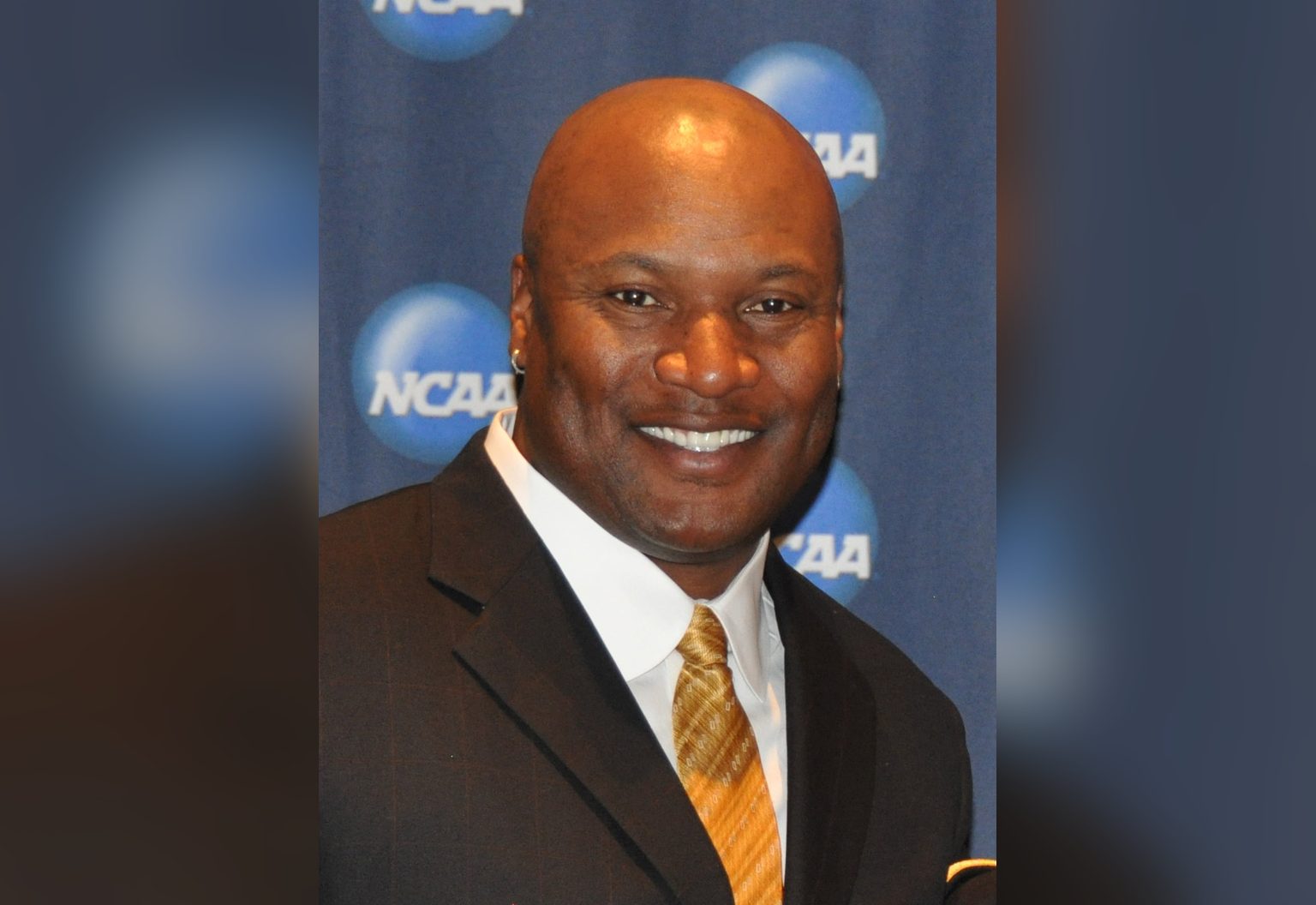
Photo: U.S. Army Materiel Command (AMC Photo by Chris Putman), CC BY 2.0, via Wikimedia Commons