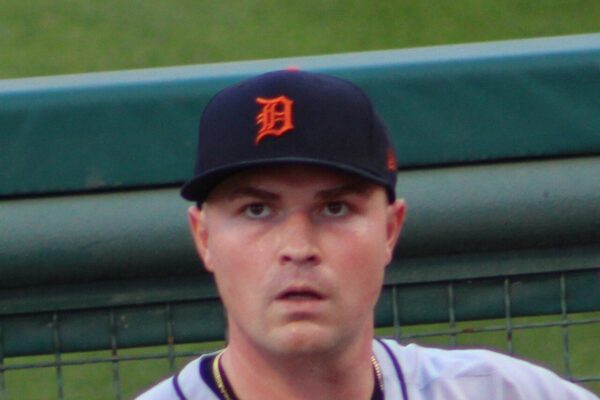
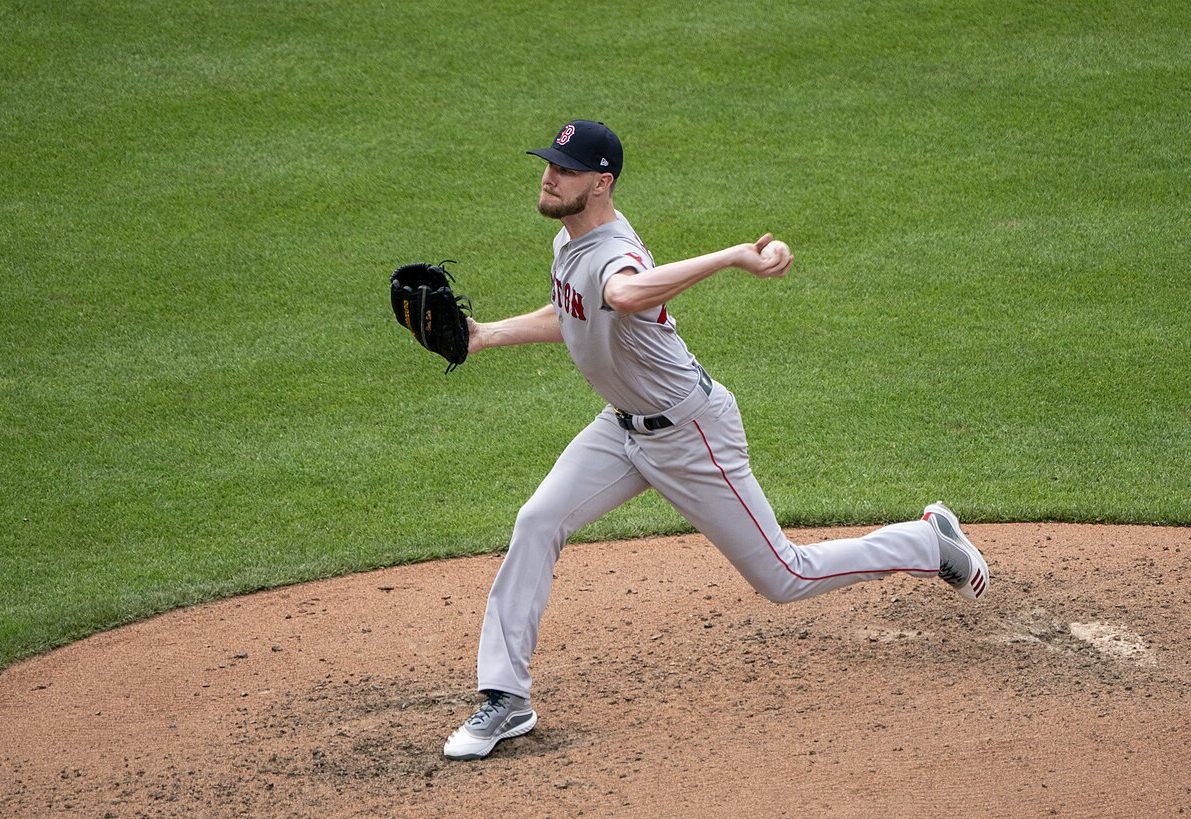
Six innings into a game, hitters often looked as if they still had not solved the first pitch. That was the effect Chris Sale could have at his best: a left-handed starter with a low, slashing delivery, late life on the fastball and a slider that seemed to arrive from somewhere behind a left-handed batter’s shoulder.
Over a career that has stretched from Chicago to Boston to Atlanta, Sale has been many things at once, a rapid-rising draft pick, a strikeout machine, a World Series champion, and, after injuries threatened to derail him, a comeback story. The through line has been the same. Few pitchers of his generation missed bats as consistently, or looked quite like him doing it.
From Lakeland to Florida Gulf Coast
Christopher Allen Sale was born on March 30, 1989, in Lakeland, Florida. At Lakeland Senior High School, he stood out not just for baseball but for basketball too, which fit the frame that would later become part of his identity on the mound: tall, thin, rangy, almost awkward until the ball left his hand.
The Colorado Rockies selected him in the 21st round of the 2007 MLB Draft, but he chose college instead of signing. That decision changed the shape of his career. Florida Gulf Coast University, then hardly a traditional baseball power, was the only Division I program to offer him a scholarship.
At FGCU, Sale developed from intriguing arm into one of the best pitchers in the country. He pitched there from 2008 through 2010 and left as the school career leader in strikeouts with 293. He also set the program mark in strikeouts per nine innings at 11.53.
His junior season turned him from prospect into first-rounder. In 2010, Sale led Division I baseball with 146 strikeouts and was named Collegiate Baseball National Player of the Year as well as Atlantic Sun Conference Pitcher of the Year. The summer before, he had sharpened his game in the Cape Cod Baseball League with the Yarmouth-Dennis Red Sox, a common proving ground for top college talent.
Even then, the look was unusual. Sale was listed at just 158 pounds in college, all limbs and leverage, but the ball came out with enough life and deception to overwhelm hitters.
Drafted by the White Sox, then rushed to the majors
The Chicago White Sox took Sale with the 13th overall pick in the 2010 MLB Draft. They did not wait long to see how his stuff would play against professionals.
He made brief stops with the Class A Winston-Salem Dash and Triple-A Charlotte Knights before reaching the majors the same summer. Sale made his MLB debut on August 6, 2010, an unusually fast climb that reflected how polished his arm already was.
At first, Chicago used him out of the bullpen. It was a short transitional phase, but it mattered. He showed right away that his fastball-slider combination could get major league hitters off balance, and the White Sox soon saw a starter’s ceiling.
Chicago: from hard-throwing lefty to staff ace
By the time Sale moved into the rotation full-time, the White Sox had found the pitcher they could build around. From 2010 through 2016, he developed into one of the American League’s most reliable strikeout starters.
His first full season as a starter in 2012 offered a clear picture of what was coming. Sale went 17-8 with a 3.05 ERA and 192 strikeouts, earning his first All-Star selection. It was the start of a seven-year run in which he made the All-Star team every season from 2012 through 2018.
Chicago committed to him before the 2013 season, signing him on March 7 to a five-year, $32 million contract with club options. Two months later, he produced one of the best outings of his White Sox years: a one-hit shutout against the Angels on May 12, carrying a perfect game into the seventh inning before it was broken up.
The strikeouts kept piling up. In 2015, Sale led the American League with 274 of them. A year later, he topped the league again with 233. Those totals captured what made him so difficult. Hitters had to deal with angle, extension and timing all at once. Left-handed batters, in particular, often looked trapped between protecting the inside corner and chasing the slider.
There was edge to his game too. Sale pitched with visible intensity, and that competitiveness became part of his public image in Chicago as much as the numbers did.
Boston brought bigger stages, and a title
After the 2016 season, the White Sox traded Sale to the Boston Red Sox, a move that sent one of baseball’s premier starters to a club expecting to contend immediately.
His first season in Boston was one of the strongest of his career. In 2017, he went 17-8 with a 2.90 ERA and led the majors with 308 strikeouts. He became the first American League pitcher since Pedro Martínez in 1999 to reach 300 strikeouts in a season, a rare benchmark in the modern game.
There was a small personal note in the move as well. Sale switched from No. 49 to No. 41 with Boston out of respect for Tim Wakefield, whose No. 49 carried deep meaning within the organization.
The next season delivered the championship moment that had been missing from his résumé. Boston won the 2018 World Series, and Sale recorded the final out of the Series, striking out Manny Machado to finish Game 5 against the Dodgers. For a pitcher whose career has been defined by swing-and-miss stuff, it was a fitting image to close the biggest stage.
Injuries changed the story
What followed was not a smooth second act. After years of heavy innings and elite production, injuries began to interrupt Sale’s career.
He made 25 starts in 2019, then underwent Tommy John surgery in March 2020, costing him that season. He returned late in 2021, but the interruptions did not stop there. In 2022, he fractured a finger on his pitching hand when he was hit by a line drive, then later suffered a broken right wrist in a bicycle accident. In 2023, he landed on the injured list with a stress reaction in his left scapula.
Those seasons changed the rhythm of his career. Instead of annual Cy Young conversations and 200-strikeout totals, the focus shifted to rehab timetables, setbacks and whether he could stay on the mound long enough to matter again.
Reports later indicated that retirement had crossed his mind before the next chapter began. Sale himself discussed how difficult the injury stretch had been, though private deliberations from that period should be treated carefully unless directly attributed to him in published interviews.
Atlanta and a late-career revival
The Red Sox traded Sale to the Atlanta Braves in December 2023, sending him back to the National League and, in a sense, back to reinvention.
What followed in 2024 was one of the best comeback seasons in the sport. Sale went 18-3 with a 2.38 ERA and 225 strikeouts in 177 2/3 innings. He led the National League in wins, ERA and strikeouts, claiming the pitching Triple Crown, and won the NL Cy Young Award.
The Braves also saw value beyond the raw numbers. Sale won a Gold Glove and was named NL Comeback Player of the Year. For a pitcher who had spent several seasons trying simply to get healthy, it was a remarkable reset.
Atlanta then moved to keep him, agreeing to an extension that guaranteed his place in the rotation beyond that season. Contract figures can vary slightly by reporting format, but the broad point was clear: the Braves were not treating him as a short-term flier anymore.
Why Chris Sale has always looked different
Some pitchers build their reputation on velocity alone. Sale’s game was more layered than that.
The first thing people noticed was the delivery. He threw from a low three-quarters slot with long stride and unusual extension, creating a visual challenge before the pitch even moved. Then came the arsenal: a lively fastball, a wipeout slider and, at his best, enough command to make both play up.
That combination helped him reach milestones quickly. Sale became the fastest pitcher in major league history to 2,000 strikeouts by innings pitched, a measure of how efficiently he turned outs into swings and misses. His career numbers place him among the most effective strikeout starters of his era, and advanced metrics have long reflected that.
Nicknames followed, including “The Condor,” a nod to his wingspan and the unmistakable shape of his motion on the mound. They fit because he never really looked like anyone else.
Off the field: family, roots and the FGCU connection
Away from baseball, Sale has kept much of his private life relatively guarded, but some details are well established. He is married to Brianna Sale, and the couple married in 2011. They have children together. His parents are Allen and Marla Sale.
One of the more consistent threads off the field has been his connection to Florida Gulf Coast. Sale has returned to the campus in the offseason to work out and spend time around the program, maintaining ties to the school that gave him his one Division I scholarship offer. That detail matters because it says something about the path he took. He was not a can’t-miss prodigy handed every opportunity. He had one clear opening, and he made it count.
That same background has helped shape how people inside baseball talk about him: not as a polished celebrity figure, but as a fiercely competitive pitcher whose career was built on development, conviction and a very unusual left arm.
FAQ
How old is Chris Sale?
Chris Sale was born on March 30, 1989.
What teams has Chris Sale played for?
He has played for the Chicago White Sox, Boston Red Sox and Atlanta Braves.
Did Chris Sale win a World Series?
Yes. He won the 2018 World Series with the Boston Red Sox and recorded the final strikeout of the Series.
Did Chris Sale win a Cy Young Award?
Yes. He won the National League Cy Young Award in 2024 with the Braves.
What jersey number does Chris Sale wear?
He has worn No. 51 with the Atlanta Braves.
Where did Chris Sale go to college?
He played college baseball at Florida Gulf Coast University.
Photo: KA Sports Photos from Hanover, MD, USA, CC BY-SA 2.0, via Wikimedia Commons