On September 6, 1995, the game in Baltimore paused at exactly the right moment. Cal Ripken Jr. had just played in his 2,131st consecutive game, moving past Lou Gehrig’s once-unthinkable record, and Camden Yards turned into a celebration. Teammates circled him. Fans would not stop cheering. The image became permanent. But if that night explains why so many people remember Ripken, it does not fully explain why he mattered.
Ripken built one of the most distinctive careers in modern baseball without ever changing uniforms. Over 21 seasons with the Baltimore Orioles, he combined unusual size for a middle infielder with power, steadiness, and a level of availability the sport had rarely seen. By the time he retired, he had piled up 3,184 hits, 431 home runs, 1,695 RBIs, two American League MVP awards, a World Series ring, and the major league record of 2,632 consecutive games played.
Growing up in Maryland baseball
Calvin Edwin Ripken Jr. was born on August 24, 1960, in Havre de Grace, Maryland, and baseball was woven into daily life early. His father, Cal Ripken Sr., spent years in the Orioles organization as a player, coach, manager, and one of the game’s respected baseball teachers. His younger brother, Billy Ripken, also reached the majors.
That family background did not make the path automatic, but it did make it familiar. Ripken attended Aberdeen High School in Maryland and came up in a household where the rhythms of the sport were constant. Clubhouses, bus rides, drills, routines, those were part of the environment long before he became a major leaguer.
The Orioles selected him in the second round of the 1978 MLB draft, 48th overall. He signed and went straight into pro ball, beginning what would become a career tied completely to one franchise.
A quick rise through the Orioles system
Ripken moved through Baltimore’s farm system as an infielder with a broad skill set rather than a one-tool prospect. He had size, arm strength, and more power than teams were used to seeing from a shortstop. He also had the kind of work habits that fit the Orioles’ old-school development culture.
He made his major league debut on August 10, 1981. At first, he was a young player finding his place on a veteran club. That did not last long.
In 1982, Ripken won the AL Rookie of the Year Award after hitting .264 with 28 home runs and 93 RBIs in 148 games. It was a strong season on its own, but it also set up the leap that followed.
From top prospect to MVP and champion
The jump from promising young infielder to centerpiece happened fast. In 1983, Ripken hit .318, led the American League with 211 hits, 47 doubles, and 121 runs scored, and won the AL MVP award. Baltimore won 98 games that season and went on to beat the Philadelphia Phillies in the World Series.
That made Ripken the first player in major league history to win Rookie of the Year and MVP in back-to-back seasons. It also established the shape of his career. He was not simply durable. He was one of the best players in the league while playing every day.
For the Orioles, he became the lineup anchor and the infield constant. For the sport, he helped redefine the shortstop position. At 6-foot-4 and around 200 pounds, he did not look like the classic quick, light middle infielder. He looked bigger, stronger, and more imposing than that archetype, and he still handled the position well enough to change how clubs thought about it.
The long middle of the career, and why it mattered
Ripken stayed with Baltimore from 1981 through 2001, all while wearing No. 8. That kind of one-team career is rare enough. Doing it while remaining productive for two decades is rarer still.
His best offensive season after the early MVP years came in 1991. He hit .323 with 34 home runs, 114 RBIs, and 46 doubles, won his second AL MVP award, took home a Gold Glove, and was named All-Star Game MVP. On May 28 of that season, he had one of the biggest single-game performances of his career, going deep three times and driving in eight runs.
The broader numbers show both quality and staying power. Ripken finished with a .276 batting average, a .340 on-base percentage, a .447 slugging percentage, and a .788 OPS. He scored 1,647 runs, stole 36 bases, and produced 95.9 WAR, according to Baseball-Reference. He also became one of the few players in major league history to reach both 3,000 hits and 400 home runs.
For years, he also held the major league record for home runs by a shortstop with 345. Later generations would bring more offense to the position, but Ripken was one of the players who opened that door.
The streak that followed him everywhere
The number most closely attached to Cal Ripken Jr. is 2,632.
His consecutive-games streak began on May 30, 1982, and lasted until September 20, 1998. Lou Gehrig’s mark of 2,130 had stood for 56 years and carried a kind of sacred untouchability. Ripken changed that on a late summer night in Baltimore, and the record-breaking game became one of the defining public moments in baseball history.
What made the streak resonate was not just the total. It was the way it fit his reputation. Ripken prepared relentlessly, played through the ordinary aches of a long season, and treated showing up as part of the job description. There were seasons when critics wondered whether the Orioles would have been better served by giving him a day off, especially during slumps. But the streak was never about a ceremonial appearance. He kept playing, and he kept contributing.
When it ended, it ended on his terms. On September 20, 1998, Ripken chose to sit, stopping the streak at 2,632 games. That decision felt consistent with the rest of his career, controlled, practical, and without much appetite for drama.
Awards, honors, and standing in the game
The honors accumulated because the performance did. Ripken was selected to 19 All-Star teams, won two AL MVP awards, collected two Gold Gloves, and earned eight Silver Slugger Awards. He was also named All-Star Game MVP twice, in 1991 and 2001.
In 1992, he received the Roberto Clemente Award, recognizing his work in the community as well as his standing in the sport.
His final season in 2001 became a farewell tour of sorts, though not a sentimental one in the way some retirements become. He remained a central figure in the game, and his home run in the 2001 All-Star Game added one more memorable scene to a career already full of them.
Ripken retired after the 2001 season. In 2007, he was elected to the Baseball Hall of Fame on the first ballot with 98.53 percent of the vote.
How Cal Ripken Jr. played
Ripken’s style started with reliability, but it did not end there. He was a right-handed hitter with real power, especially for an infielder, and he paired that with strong instincts and a dependable arm. Early in his career, he was a shortstop who could change a game with extra-base hits. Later, as his range changed with age, he also spent time at third base and handled the transition smoothly.
The larger point is that he was never just a symbol of endurance. He was a complete player for a long time. The power was real. The defense was respected. The baseball IQ was obvious. And his size helped alter the sport’s imagination about what a shortstop could look like.
Family, business, and life after the last game
Ripken’s life off the field has remained closely connected to baseball. In 1987, his father became the first manager in major league history to manage two sons in the same game when Cal Jr. and Billy both appeared for Baltimore. It remains one of the more unusual family notes in the sport.
He married Kelly Geer in November 1987, and they had two children, Rachel and Ryan. Their marriage later ended in divorce. He married Laura S. Kiessling in 2018. Public reports have identified her as an Anne Arundel County Circuit Court judge.
After retirement, Ripken moved into youth baseball, business, and ownership. He became a leading figure in Ripken Baseball and was involved in minor league club ownership, including the Aberdeen IronBirds. He also joined the Baltimore Orioles ownership group.
His charitable work has been a major part of his post-playing years. In 2001, he and his family helped found the Cal Ripken, Sr. Foundation, which focuses on underserved young people through programs tied to sports, mentoring, and community spaces. He has also worked in youth-development roles connected to Major League Baseball and public service.
There have been a few controversies and rumors attached to his name over the years, and they need careful framing. In 2015, former major leaguer Gregg Zaun made allegations about clubhouse hazing from the 1990s that included Ripken and others. Ripken denied the claims, and Zaun later apologized, describing the incidents as “horseplay.”
A long-running rumor about an alleged affair involving Ripken’s former wife Kelly and actor Kevin Costner has circulated online for years. That story has not been substantiated, and published accounts tied to Kelly Ripken have described it as false.
Why the career still stands out
Some careers are remembered for a peak. Some for a single record. Ripken’s is harder to reduce than that, even though the streak will always lead the conversation. He was a franchise player who stayed with one club, an MVP who helped win a championship, and a big shortstop who helped expand the position’s profile.
And then there is the simplest part of the story: for more than 16 straight seasons, he was there every day.
FAQ
How many consecutive games did Cal Ripken Jr. play?
Cal Ripken Jr. played 2,632 consecutive games, the major league record.
What positions did Cal Ripken Jr. play?
He played mostly shortstop and also spent significant time at third base.
How many World Series titles did Cal Ripken Jr. win?
He won one World Series, with the Baltimore Orioles in 1983.
When was Cal Ripken Jr. inducted into the Hall of Fame?
He was inducted into the Baseball Hall of Fame in 2007.
What was Cal Ripken Jr.’s nickname?
He was widely known as “Iron Man.” He was also often called “Rip.”
What is Cal Ripken Jr. known for off the field?
He is known for youth baseball work, the Cal Ripken, Sr. Foundation, and his business and ownership roles in the sport.
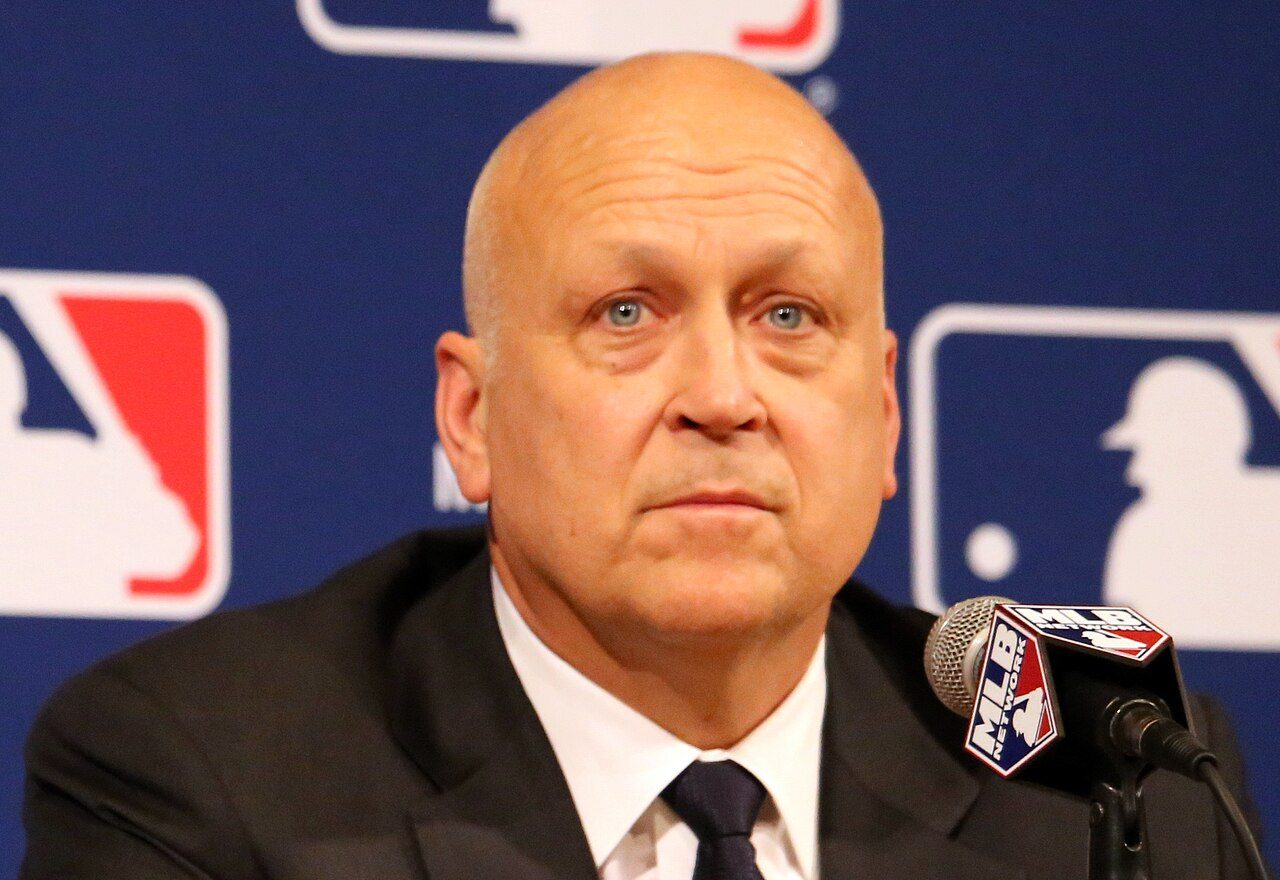
Photo: Arturo Pardavila III from Hoboken, NJ, USA, CC BY 2.0, via Wikimedia Commons