A record-setting move brought Jung Hoo Lee to San Francisco, but the story started long before the six-year, $113 million contract. Long before Oracle Park, before the posting process, before the nickname that followed him across the Pacific, he was a baseball kid growing up in a family already known to Korean fans.
From Nagoya to Seoul
Lee was born on August 20, 1998, in Nagoya, Japan, while his father, former KBO star Lee Jong-beom, was playing for the Chunichi Dragons. That detail alone made his background unusual. So did the expectations that came with his last name.
He grew up in South Korea and attended Whimoon Middle School and Whimoon High School in Seoul. His father, famous for the nickname “Son of the Wind,” was reportedly hesitant at first about his son choosing baseball. When he finally agreed, one condition stood out: Jung Hoo Lee would hit left-handed despite being naturally right-handed. It was a small family decision that ended up shaping the hitter he became.
There was no college detour. Lee went straight into professional baseball, signing with the Nexen Heroes before the 2017 season. In a sport that usually asks young players to wait their turn, he did not wait long.
A KBO debut that skipped the usual steps
Most prospects spend time in the Futures League. Lee did not. He made the Opening Day roster right away, and the jump looked natural almost immediately.
His rookie season in 2017 remains one of the strongest first-year campaigns in KBO history. He won Rookie of the Year, collected 179 hits to set a league rookie record, and appeared in all 144 games. For a player straight out of high school, that kind of durability mattered almost as much as the batting line. It showed how polished he already was.
The early version of Lee was easy to recognize: short, direct swing; advanced strike-zone feel; very little swing-and-miss; and the ability to line the ball all over the field. He was not built around towering home-run totals. He was built around pressure. At-bat after at-bat, he made pitchers work.
Building his name with the Heroes
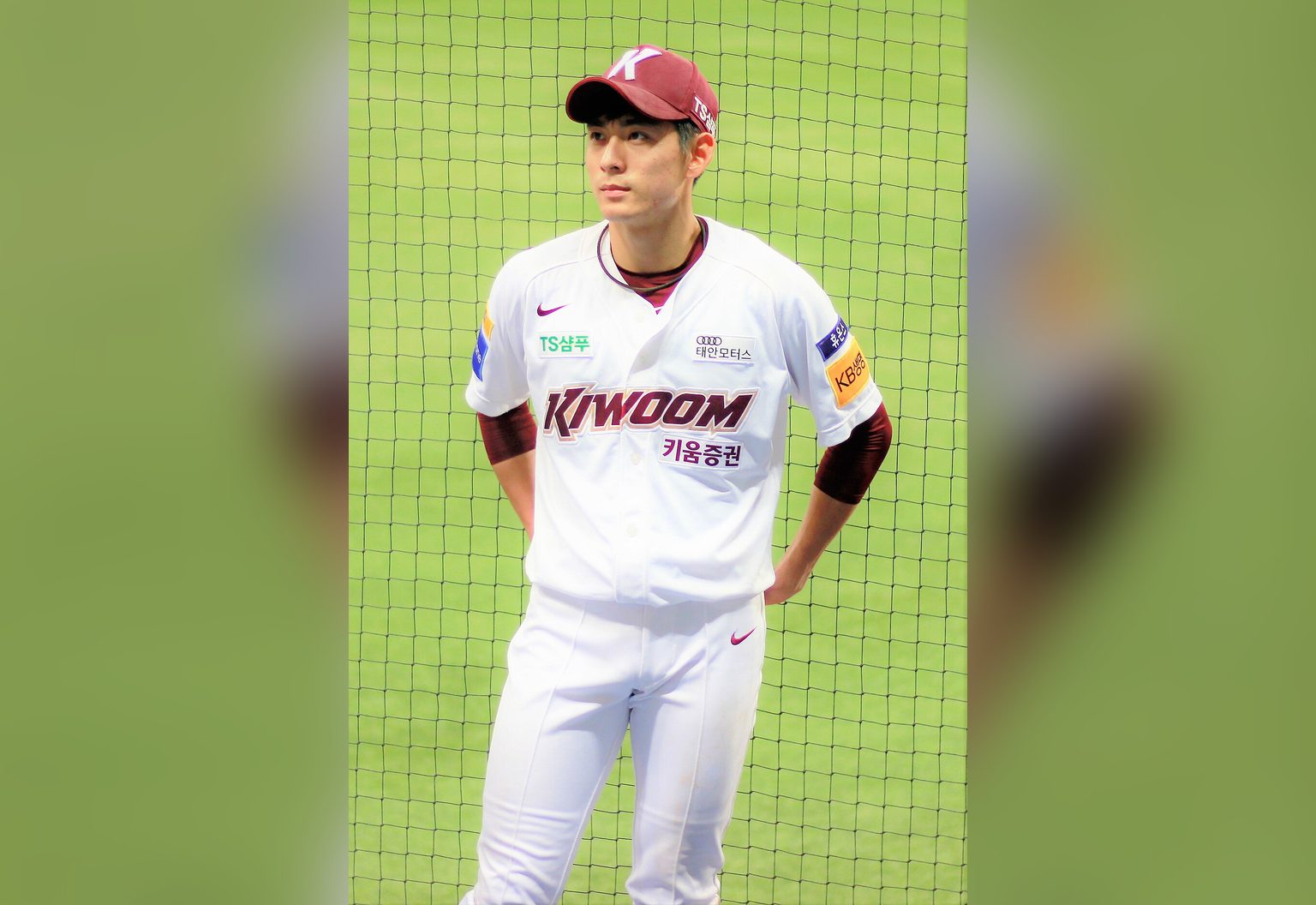
The franchise changed names from Nexen to Kiwoom, but Lee’s role stayed the same. He became the center of the lineup and one of the most dependable hitters in the league.
From 2017 through 2023, he played 884 KBO games and hit .340 with 1,181 hits, 65 home runs, 515 RBI, 69 stolen bases and an .898 OPS. Those are not inflated by one big season alone. They reflect year-after-year production.
The awards followed in order. He won five straight Golden Gloves as an outfielder from 2018 through 2022. He was also selected to the KBO All-Star “Best 12” multiple times, including 2017, 2019, 2020, 2021 and 2022.
One of the more memorable moments came in the 2019 postseason, when he was named KBO Playoff MVP. That honor carried a family angle too: his father had also won a postseason MVP award, making them the first father-son pair in KBO history to do it. Later that year, Lee led the WBSC Premier12 tournament with five doubles, another reminder that his game translated well against top competition.
The MVP season that pushed him toward MLB
By the time 2022 arrived, Lee was no longer just a steady star. He was the standard many KBO pitchers had to solve.
He won league MVP in 2022 after leading the KBO in batting average (.349), hits (193), on-base percentage (.421), slugging percentage (.575) and RBI (113). He added another Golden Glove and, in the postseason, another Playoff MVP award. It was the kind of season that tends to change the conversation around a player. In Lee’s case, it sharpened the question of when, not whether, he would head to Major League Baseball.
His final KBO season was cut short. In July 2023, he suffered a fractured left ankle and underwent season-ending surgery. The injury interrupted his last chapter in Korea, but it did not change the broader picture. By then, he had already established himself as one of the most accomplished hitters of his generation in the KBO.
The San Francisco Giants make their move
In December 2023, the San Francisco Giants signed Lee to a six-year contract worth $113 million. The deal included an opt-out after the 2027 season, a $5 million signing bonus, and a posting fee paid to the Kiwoom Heroes.
It was a major commitment for a player making the jump from South Korea to MLB, and it reflected how strongly the Giants believed in his hit tool, athleticism and defensive value. Lee chose No. 51, a nod to Ichiro Suzuki, the player he grew up admiring.
At his introductory press conference, he leaned into the family nickname with a line that quickly stuck: if his father was the “Son of the Wind,” he called himself the “Grandson of the Wind.” It was playful, but it also captured something real about his public image. Lee arrived with pedigree, but also with a clear sense of self.
A first MLB season interrupted
His first season in the majors offered only flashes before injury took over the story.
Lee debuted with San Francisco in 2024 and played 37 games, batting .262 with 2 home runs and 8 RBI. He showed the traits the Giants had paid for: contact, line drives, speed underway, and comfort in the outfield. Then, in May, he crashed into the wall while making a defensive play and suffered a left shoulder injury. He underwent season-ending labrum surgery on May 17.
That left his first MLB year unfinished and forced an early reset. For many international signings, the first season is already an adjustment in language, travel, pitching quality and schedule. Lee had to handle all of that while also rehabbing a major injury.
Back on the field
His return season mattered because it gave a clearer picture of what his game could look like over a full major league schedule.
In 2025, he played 150 games and hit .266 with 8 home runs and 55 RBI. One number stood out more than the home runs: 12 triples. That tied Ichiro Suzuki for the most triples in an MLB season by an Asian-born player, a fitting stat for someone whose game is built on contact, angles and speed rather than brute force.
The broader takeaway was simple. Lee did not need to become a slugger to be useful. He could impact games by reaching base, stretching singles into doubles, taking extra bases and covering ground in the outfield.
Some reports during that period also pointed to his popularity in the Bay Area and beyond. Claims about jersey sales circulated publicly, but unless tied to official MLB merchandise data, those figures are best treated cautiously rather than as settled fact.
What kind of player is Jung Hoo Lee?
The easiest label is “contact hitter,” but that undersells him.
Lee’s game is built on bat control and timing. He rarely looks overmatched, and he has long been known for a low strikeout profile. In Korea, that made him one of the toughest hitters in the league to put away. In the majors, the same traits give him a chance to stay productive even without classic corner-outfielder power.
He can also handle pitches outside the ideal hitting zone, which is why he is often described as a strong bad-ball hitter. That does not mean reckless aggression. It means he can spoil tough pitches, extend at-bats and still put the ball in play when pitchers think they have escaped danger.
Defensively, he has experience in center field as well as the corners. His reads, range and arm strength have all been part of his profile. For the Giants, that versatility matters. He is not simply a bat-first outfielder. He contributes in multiple phases of the game.
Life away from the field
Family remains central to Lee’s public identity. He is the son of Lee Jong-beom, and his brother-in-law is pitcher Go Woo-suk. Because of that background, attention has followed him for years, but he has generally handled it with a calm, measured public style.
His commercial profile has grown with his baseball career. He has been linked to endorsement and fashion work with brands including Adidas, Paldo, USANA, Tag Heuer, McLaren, Dior and Louis Vuitton. Where exact dates or contract terms are not publicly documented in primary sources, those partnerships should be treated as reported commercial associations rather than exhaustively verified sponsorship records.
There are also documented charitable and community ties. Public reporting has noted community-giving provisions connected to his Giants contract, and he has been associated with youth education efforts around performance-enhancing drugs through baseball-related outreach work.
One more personal detail has surfaced in his own words. In a Players’ Tribune essay, Lee described a period when physical pain and mental exhaustion reportedly left him close to stepping away from baseball during an offseason. Because that account comes from Lee himself, it is part of the public record. Even so, it should be understood as a reflection on a difficult stretch, not evidence of any formal retirement plan.
The shape of his career so far
Lee’s path has not been built on noise. It has been built on consistency, polish and adaptation.
He arrived in the KBO as a teenager and hit immediately. He stayed long enough to win Rookie of the Year, an MVP award, five straight Golden Gloves and multiple postseason honors. Then he crossed to MLB with the San Francisco Giants carrying both expectation and injury risk, and his first years in the majors quickly showed both the promise and the challenge of that transition.
What remains constant is the style. Jung Hoo Lee is still the same kind of player he was when he first appeared in Korea: a hitter who values contact, an outfielder who can move, and a player whose game tends to reveal itself over the course of a series rather than in one loud swing.
FAQ
What is Jung Hoo Lee’s nickname?
He is widely known as the “Grandson of the Wind,” a reference to his father Lee Jong-beom’s nickname, “Son of the Wind.”
Where was Jung Hoo Lee born?
He was born in Nagoya, Japan, on August 20, 1998.
Which team does Jung Hoo Lee play for?
He plays for the San Francisco Giants.
When did Jung Hoo Lee join MLB?
He joined Major League Baseball after signing with the Giants in December 2023 and debuted in the 2024 season.
What did Jung Hoo Lee achieve in the KBO?
He won KBO Rookie of the Year in 2017, league MVP in 2022, and five straight Golden Gloves from 2018 through 2022.
Why does Jung Hoo Lee wear No. 51?
He chose No. 51 as a tribute to Ichiro Suzuki.
Photo: Trainholic, CC BY-SA 3.0, via Wikimedia Commons