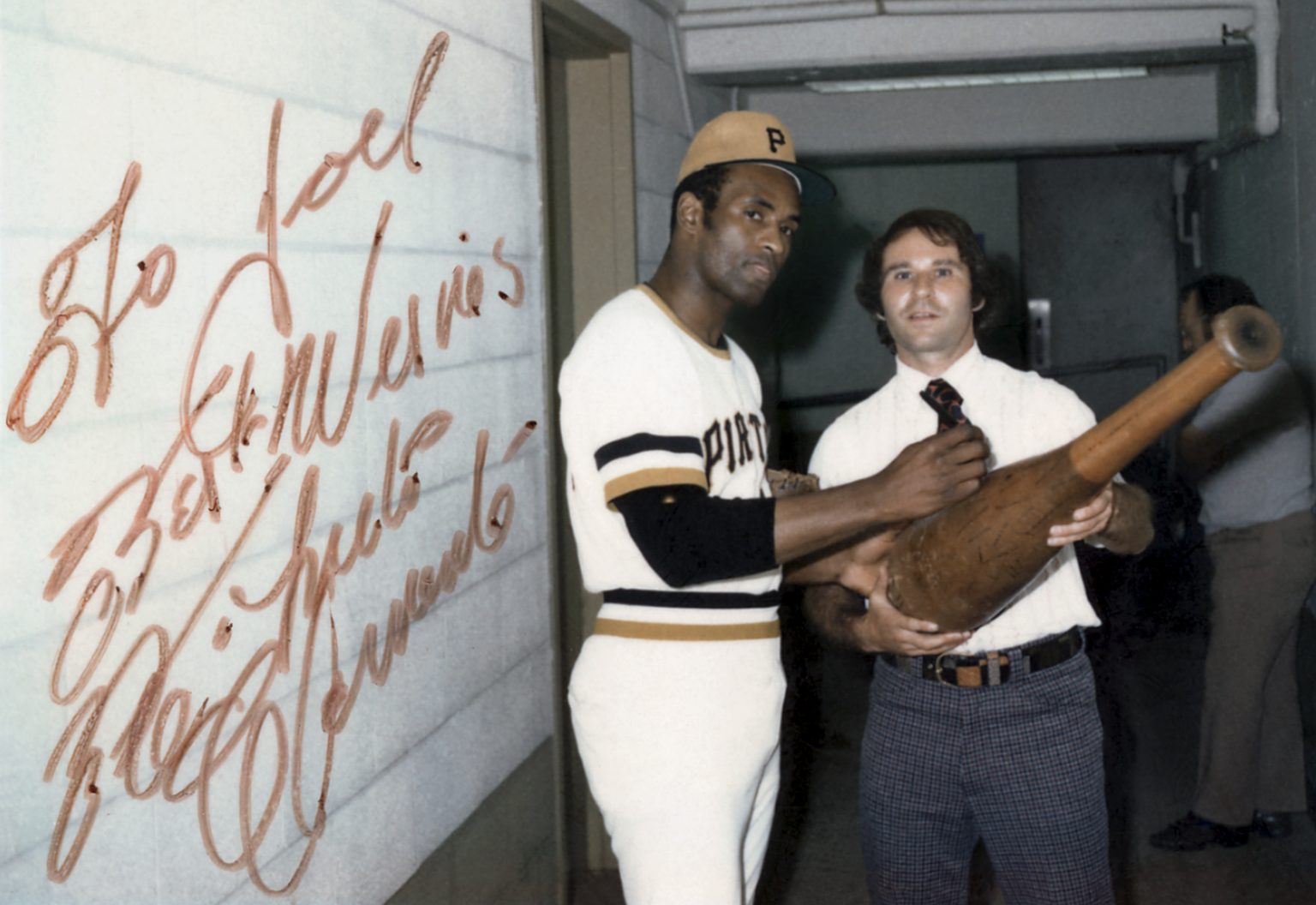
Hit No. 3,000 came on a line drive to left-center at Three Rivers Stadium, the final regular-season at-bat of Roberto Clemente’s career. It was September 30, 1972, and nobody in the park could have known that the milestone would also become the closing image of one of baseball’s most resonant lives.
Clemente’s record is easy to list and harder to fully capture. He played 18 seasons for the Pittsburgh Pirates, won the National League MVP in 1966, collected 12 straight Gold Gloves, made 15 All-Star teams, helped the club win two World Series, and was named World Series MVP in 1971. He also died at 38 in a plane crash off Puerto Rico while accompanying relief supplies for earthquake victims in Nicaragua. With Clemente, the baseball career and the life off the field are inseparable.
From San Antón to pro ball
Roberto Enrique Clemente Walker was born on August 18, 1934, in San Antón, Carolina, Puerto Rico. He grew up in a large working-class family, and from an early age his athletic ability stood out. Baseball became the path, but it was not his only sport; he also competed in track and field, and later stories often described him as a strong thrower in events like the javelin. Claims that he was an “Olympic hopeful,” though widely repeated, are harder to pin down and are best treated cautiously.
What is clear is that he was already a serious talent as a teenager. He attended Julio Vizcarrondo Coronado High School in Carolina and began playing high-level baseball in Puerto Rico. With Cangrejeros de Santurce in the Puerto Rican Winter League, he faced advanced competition while still very young. Those seasons helped shape the player he would become: quick hands at the plate, confidence on the bases, and an outfielder’s instinct for turning difficult plays into routine ones.
The Brooklyn Dodgers signed him in 1954 for a bonus reported at $10,000. He was assigned to Montreal, then the Dodgers’ top farm club. That stop mattered for another reason too. Because he had signed for a bonus above the threshold in place at the time, the Dodgers were supposed to keep him on the major league roster or risk losing him. A long-circulating account holds that Brooklyn tried to keep him out of sight in the minors to protect him. Whether framed as strategy or miscalculation, the result is not in dispute: the Pirates selected him in the Rule 5 draft on November 22, 1954, for $4,000.
Pittsburgh had found its right fielder.
Learning the majors in Pittsburgh
Clemente debuted with the Pirates in 1955. He was talented immediately, but the early years were not smooth in every sense. He was adjusting to major league pitching, to life in the continental United States, and to a baseball culture that often treated Latino players carelessly or condescendingly. Sportswriters and broadcasters regularly called him “Bob” or “Bobby,” a habit he disliked and pushed back against. It was not a small point to him. His name, his background, and the way he was described all mattered.
On the field, his game came into focus quickly. He could hit to all fields, run well, and throw harder than almost anyone in the sport. By 1956 he was batting .311. By the end of the decade he had become one of the National League’s most complete players, even if national recognition sometimes lagged behind the quality of his play.
Then came 1960, the season when the Pirates broke through. Clemente hit .314, made the All-Star team, and helped Pittsburgh win the pennant. In the World Series against the Yankees, the Pirates won in seven games on Bill Mazeroski’s famous walk-off home run. That finish became the headline, but Clemente’s role in the rise of that club was already central.
Batting titles, Gold Gloves, and an MVP season
The next decade turned him from standout into fixture. Clemente won the first of his 12 consecutive Gold Gloves in 1961 and never gave one back. The award matched what opponents already knew: running on his arm was a gamble, and often a losing one. He played right field with unusual urgency, charging balls hard and throwing with carry and accuracy that changed innings.
At the plate, he was more than a high-average hitter. He won four National League batting titles, hitting .351 in 1961, .339 in 1964, .329 in 1965, and .357 in 1967. He did not pile up strikeouts, and he did not need home-run totals to control a game. He could slash a ball into the gap, beat out a hit, go first to third, and then cut down a runner in the next inning.
His best all-around regular season came in 1966. Clemente batted .317 with 29 home runs, 119 RBIs, and elite defense, and he won the National League MVP award. By then, he was no longer just the Pirates’ star right fielder. He was one of the defining players in the league.
The honors kept coming. He was selected to 15 All-Star teams; because Major League Baseball held two All-Star Games each year from 1959 through 1962, that total reflects 13 All-Star seasons rather than 15 separate years. That distinction gets lost sometimes, but the point remains: for more than a decade, he was a constant presence among the game’s best players.
The complete player
A lot of great players are remembered for one tool. Clemente is remembered for the whole package.
He finished his major league career with a .317 batting average, 3,000 hits, 240 home runs, 1,305 RBIs, 1,416 runs scored, and 83 stolen bases. The numbers are strong on their own, but they make more sense when tied to the way he played. He was aggressive without being reckless. He hit for average, but with authority. He could turn defense into offense with one throw.
That throwing arm became part of his legend, though the underlying reality was even more impressive than the stories. Runners respected it. Coaches planned around it. Teammates trusted it. In an era before advanced tracking data, his defensive value was obvious even without a spreadsheet.
October, at last, in 1971
If 1960 announced the Pirates as champions, 1971 gave Clemente his signature postseason stage.
Pittsburgh reached the World Series again and faced the Baltimore Orioles, a deep and excellent club. Clemente was brilliant. He hit .414 in the series, homered twice, drove in four runs, and was named World Series MVP as the Pirates won in seven games. It was the kind of performance that fit him perfectly: polished, forceful, and impossible to miss.
By then he was in his late 30s, but he was still producing at a high level. The old idea that he was merely a gifted all-around player no longer covered it. He was a finished star, fully recognized.
Hit No. 3,000 and the final winter
The last chapter of his playing career arrived with one more landmark. On September 30, 1972, Clemente lined his 3,000th hit off the Mets’ Jon Matlack. He became the 11th player in major league history to reach that mark. It was also his final regular-season hit. He finished the year with a .312 average and closed his career exactly at 3,000 hits.
That winter, the story shifted away from baseball.
Clemente had long been active in charitable work across the Caribbean and Latin America. After a devastating earthquake struck Nicaragua in late December 1972, he helped organize relief shipments. Reports at the time said earlier aid flights had been diverted or stolen by corrupt officials, and Clemente decided to accompany a plane himself to help make sure supplies reached the people who needed them.
On December 31, 1972, the overloaded DC-7 carrying Clemente crashed into the Atlantic Ocean shortly after taking off from San Juan. His body was never recovered.
Military service, family, and the man away from the field
Off the field, Clemente’s life had depth and structure beyond fame. After the 1958 season, he enlisted in the U.S. Marine Corps Reserve and served for several years, including active reserve training obligations through the mid-1960s.
He married Vera Zabala on November 14, 1964. They had three sons: Roberto Jr., Luis Roberto, and Enrique Roberto. Family life remained closely tied to Puerto Rico, which stayed at the center of his identity no matter how prominent he became in Pittsburgh.
That identity mattered in public too. Clemente spoke openly about the treatment of Black and Latino players and about the way language could diminish people. He insisted on being seen clearly, not translated into something more comfortable for others. In that sense, his career belongs not only to baseball history but also to the broader story of Latin American players claiming space in the major leagues on their own terms.
One small detail that often circulates involves his uniform number. A widely repeated story says he wore No. 21 because “Roberto Enrique Clemente Walker” contains 21 letters. That account is popular, but it remains anecdotal and is not firmly documented; other explanations simply note that the number was available.
Hall of Fame and lasting place in baseball
Baseball moved quickly to honor him after his death. In 1973, the Hall of Fame waived the standard waiting period and elected Clemente in a special posthumous vote. He became the first player born in Latin America inducted into Cooperstown.
His legacy also lives through the Roberto Clemente Award, presented annually to a major leaguer who best represents sportsmanship and community involvement. The award existed in another form before his death, but it was renamed in his honor in 1973, a sign of how strongly his humanitarian work had already shaped his memory.
As a player, he remains easy to place among the great right fielders. As a public figure, he occupies a rarer category. Few stars combined elite performance, cultural significance, and a final act of service in quite the same way. The statistics explain the player. The rest of the story explains why Roberto Clemente still means more than statistics.
FAQ
When was Roberto Clemente born?
Roberto Clemente was born on August 18, 1934.
What team did Roberto Clemente play for?
He played his entire major league career with the Pittsburgh Pirates, from 1955 through 1972.
How many hits did Roberto Clemente have?
He finished with exactly 3,000 career hits.
How many Gold Gloves did Roberto Clemente win?
He won 12 Gold Glove Awards, all in consecutive seasons from 1961 through 1972.
How did Roberto Clemente die?
He died in a plane crash on December 31, 1972, while accompanying relief supplies for earthquake victims in Nicaragua.
Was Roberto Clemente in the Hall of Fame?
Yes. He was elected to the Baseball Hall of Fame in 1973 in a special posthumous election.
Photo: R6830, CC BY-SA 4.0, via Wikimedia Commons