Thirty-eight saves put John Rocker at the back of Atlanta’s bullpen in 1999, finishing games for a team headed to the World Series. His fastball could reach the upper 90s, and his slider gave hitters another reason not to get comfortable. By the end of that December, though, an interview rather than a pitch had become the biggest story of his career.
The left-hander’s major-league run lasted six seasons, from 1998 through 2003. His best work came early, close to home, with the Braves. What followed was a suspension, three changes of team and a brief attempt to rebuild his career in independent baseball.
A Georgia pitcher gets his chance
John Loy Rocker was born on October 17, 1974, in Statesboro, Georgia, and attended First Presbyterian Day School in Macon. He threw three no-hitters in high school, showing the arm strength that would attract professional scouts.
Atlanta selected him in the 18th round of the 1993 amateur draft, with the 516th overall pick. That was hardly a direct ticket to a major-league bullpen. He spent several years working through the Braves’ minor-league system, eventually reaching Double-A Greenville and Triple-A Richmond before his first call-up.
His physical presence was difficult to miss. Listed at 6-foot-4, he threw left-handed and batted right-handed, delivering the ball with an aggressive motion that matched his hard fastball. Command could be a problem, but the pitches themselves gave Atlanta something to develop.
The Braves already had a pitching staff built around established starters. Rocker’s opening would come in relief, where a short, forceful outing could matter more than a broad repertoire.
From rookie relief work to the World Series
Rocker made his MLB debut on May 5, 1998. In 38 innings that season, he posted a 2.13 ERA and a 1-3 record, earning a place in Atlanta’s postseason bullpen. He also supplied scoreless relief during the National League Championship Series against San Diego, although the Padres won the series.
The following spring brought a much larger assignment. Closer Kerry Ligtenberg’s elbow injury left Atlanta needing someone to handle the ninth inning, and Rocker took over.
He finished 1999 with 38 saves, a 2.49 ERA and 104 strikeouts in 72⅓ innings. The saves total was one short of the franchise record then held by Mark Wohlers. More revealing than his 4-5 record was how often he could end an at-bat without asking the defense to intervene.
There was nothing subtle about the basic approach: challenge hitters with velocity, then use the slider to change the angle and speed. When he located both pitches, he could work through the late innings quickly.
Atlanta won the National League pennant and met the New York Yankees in the World Series. Rocker pitched in the series, but the Braves were swept in four games. He would never return to that stage.
The interview that changed his career
In an interview published by Sports Illustrated in December 1999, Rocker made racist, homophobic and xenophobic remarks while discussing New York and its residents. The article also reported a racist insult directed at Braves teammate Randall Simon.
The fallout extended well beyond the usual scrutiny of an outspoken athlete. Commissioner Bud Selig initially suspended him through the remainder of spring training and the first 28 days of the 2000 regular season, imposed a $20,000 fine and ordered sensitivity training.
An arbitrator subsequently reduced the regular-season suspension to 14 days and the fine to $500, while allowing him to participate in spring training.
The distinction matters: the original punishment and the penalty he ultimately served were not the same.
Another confrontation followed in June 2000, when Rocker threatened Jeff Pearlman, the reporter who had written the Sports Illustrated article. Atlanta sent the pitcher to Triple-A Richmond shortly afterward, amid concerns about both his conduct and his pitching.
He nevertheless finished the major-league season with 24 saves and a 2.89 ERA. On the mound, he remained capable of effective relief work. Away from it, his relationship with the club had become increasingly difficult.
Three teams and a shrinking margin for error
Atlanta traded Rocker to the Cleveland Indians on June 22, 2001, in a deal that brought relievers Steve Karsay and Steve Reed to the Braves.
The move separated him from the organization that had drafted and developed him. It did not restore his earlier consistency. In 38 appearances for Cleveland that season, he went 3-7 with four saves and a 5.45 ERA.
Another trade sent him to the Texas Rangers in December 2001. His 2002 season produced a 2-3 record and a 6.66 ERA across 30 appearances. The fastball-slider combination that had once made him a reliable ninth-inning option was no longer delivering comparable results.
His final major-league opportunity came with the Tampa Bay Devil Rays in 2003. He appeared in just two games, allowing one earned run in one inning for a 9.00 ERA. That small sample closed his MLB career.
Across six seasons, he finished with a 13-22 record, a 3.42 ERA, 332 strikeouts and 88 saves. Those totals reflect two distinctly different stretches: three opening seasons with an ERA below 3.00, followed by declining results and shorter stays.
In 2005, Rocker tried again with the Long Island Ducks of the independent Atlantic League. The comeback was brief and did not lead to another major-league contract. It became his final professional playing stop.
What made him effective and what did not last
At his peak, Rocker could overpower hitters without needing an elaborate sequence. His fastball created pressure; his slider offered a finishing pitch. The 104 strikeouts he recorded in 1999 remain the clearest statistical expression of that combination.
But velocity alone did not make the job secure. Walks and uneven command narrowed his margin for error, particularly as his career progressed. A reliever asked to protect a one-run lead has little room for extra baserunners.
His strongest season was substantial, not merely memorable because of the controversy that followed. Equally, it was not the beginning of a long run as an established closer. Most of his 88 saves came with Atlanta, and his effectiveness fell sharply after leaving the Braves.
Film roles, a memoir and Survivor
Rocker’s work outside baseball began before his playing career ended. He starred in the 2002 horror-comedy The Greenskeeper, an unusual sideline for an active major-league pitcher.
After baseball, he pursued real-estate interests and continued seeking a public platform. His autobiography, Scars and Strikes, was published in 2011. He later wrote columns for the conservative website WorldNetDaily.
Reality television gave him a different kind of exposure. In 2014, he joined Survivor: San Juan del Sur with Julie McGee, who was introduced on the program as his girlfriend. The season’s “Blood vs. Water” format brought pairs of loved ones into the competition, initially placing them on opposing tribes.
His baseball history followed him onto the island. Other contestants discussed his identity and past remarks, and a confrontation with Natalie Anderson became part of his televised run. He was voted out early and finished 16th.
The setting had changed considerably from a ninth inning in Atlanta. The public attention, however, still turned on the tension between his competitive persona and his conduct. His post-baseball résumé came to include acting, publishing, business and reality television, while his playing record remained anchored by that brief, effective stretch in the Braves’ bullpen.
FAQ
When did John Rocker play in MLB?
He played from 1998 through 2003 for the Atlanta Braves, Cleveland Indians, Texas Rangers and Tampa Bay Devil Rays.
How many career saves did he have?
He recorded 88 MLB saves. His single-season high was 38 with Atlanta in 1999.
Why was he suspended in 2000?
MLB disciplined him for offensive remarks published in Sports Illustrated. His initial 28-day regular-season suspension was reduced to 14 days on appeal, and his fine was reduced from $20,000 to $500.
Did he win a World Series?
No. He pitched for Atlanta in the 1999 World Series, which the Yankees won in a four-game sweep.
When did he retire from professional baseball?
His final MLB appearances came in 2003. He last played professionally during a brief stint with the Long Island Ducks in 2005.
Was John Rocker on Survivor?
Yes. He competed on Survivor: San Juan del Sur in 2014 alongside then-girlfriend Julie McGee and finished 16th.
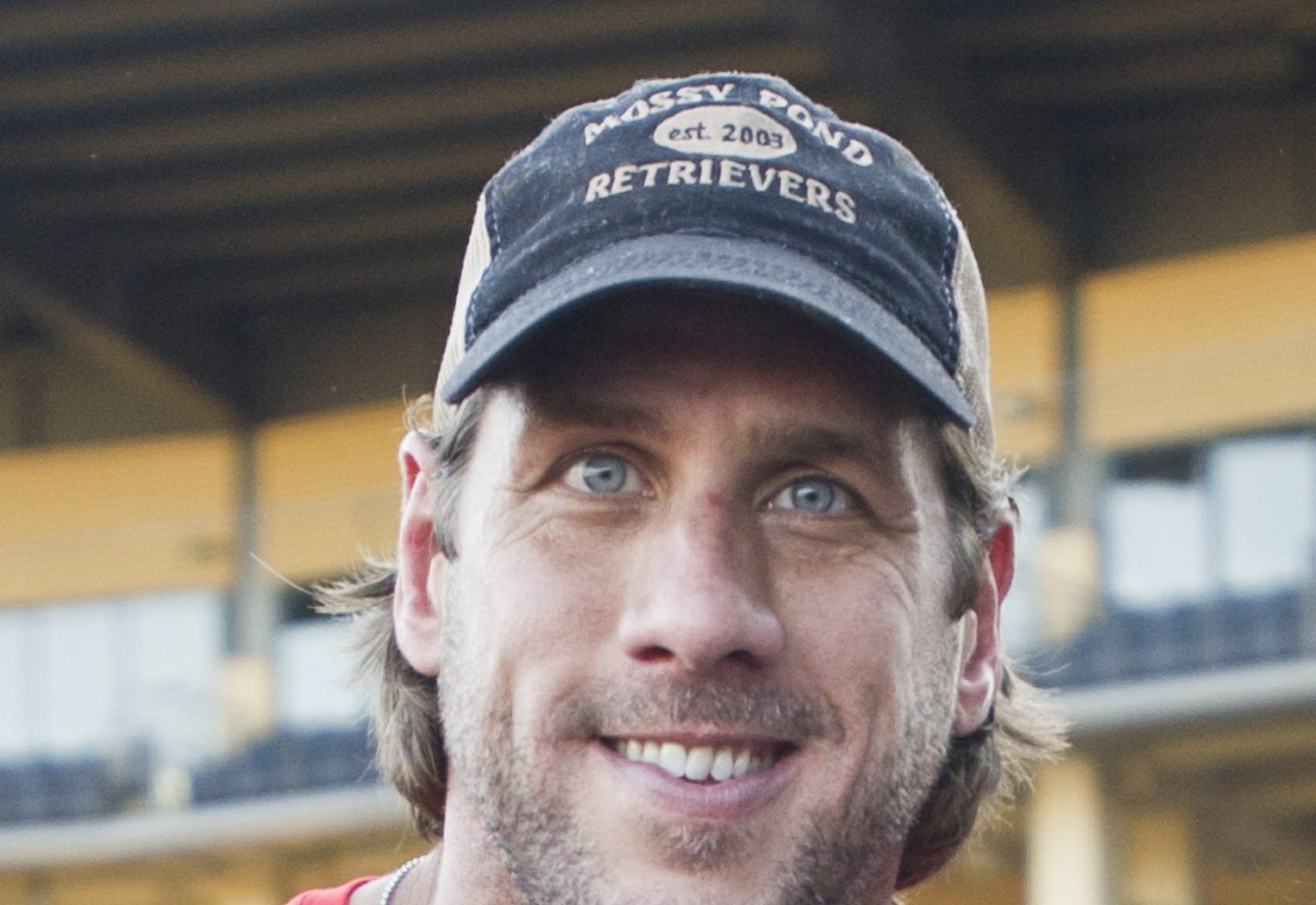
Photo: Tracy J. Smith, Public domain, via Wikimedia Commons