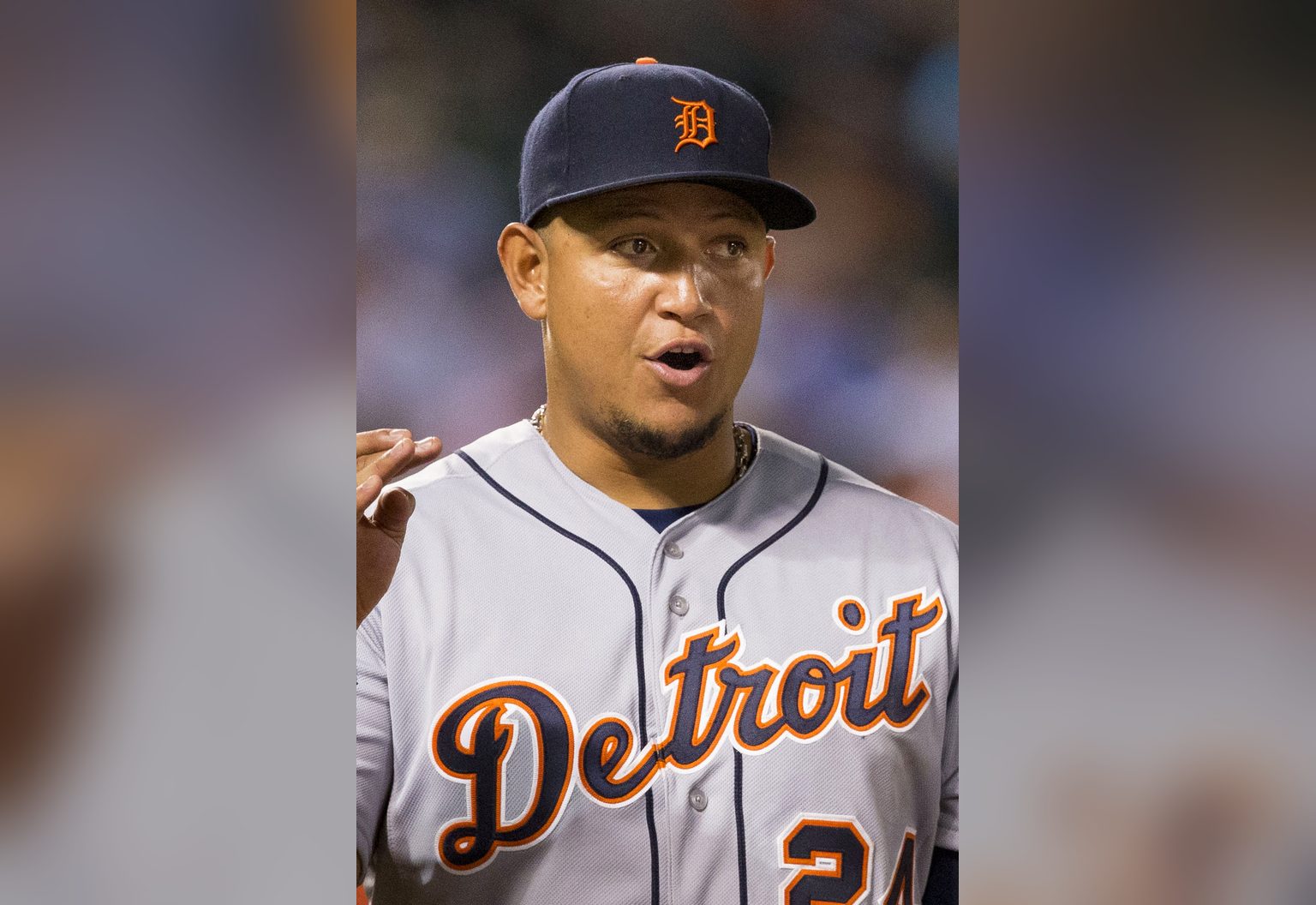
On June 20, 2003, a 20-year-old called up from Double-A ended his first major league game with a walk-off home run. Four months later, Miguel Cabrera was a World Series champion. His arrival with the Florida Marlins moved quickly; the career that followed lasted 21 seasons.
By his final game with Detroit in 2023, the Venezuelan had collected 3,174 hits, 511 home runs and a .306 batting average. Only Hank Aaron and Willie Mays had previously combined 3,000 hits and 500 homers with a career average of at least .300. Between those first and last swings came a rare Triple Crown, two MVP awards and a long run as the hitter opposing pitchers struggled to work around.
A baseball education in Maracay
José Miguel Cabrera Torres was born on April 18, 1983, in Maracay, Venezuela. Baseball was part of the household, not simply something on television. His father, Miguel, played amateur baseball, while his mother, Gregoria Torres, represented Venezuela in softball. His maternal uncle, David Torres, also helped with his development.
The youngster grew into a tall, powerful right-handed hitter, but his professional career began at shortstop. The Florida Marlins signed him as an international amateur free agent in July 1999 for a reported $1.8 million bonus. There was no draft selection or college stop: at 16, he was already entering professional baseball.
His American minor league career began in 2000. By 2002, he was playing for the Jupiter Hammerheads, and the following season he reached the Double-A Carolina Mudcats. His bat accelerated the timetable. Florida needed offense, and Cabrera was hitting well enough to make his age a secondary concern.
Florida: a walk-off, then a championship
The Marlins brought him up on June 20, 2003, against the Tampa Bay Devil Rays. In the 11th inning, he hit a two-run homer off Al Levine to give Florida a 3-1 victory.
He stayed in the lineup, moving into left field on a team that gathered momentum under manager Jack McKeon. Cabrera finished the regular season with a .268 average, 12 home runs and 62 RBIs in 87 games.
October supplied a tougher introduction. In Game 4 of the World Series, after Roger Clemens backed him away from the plate with an inside fastball, Cabrera hit a first-inning home run off the Yankees right-hander. Florida won the series in six games.
The championship was his only one, but the rookie season was no isolated burst. He made four consecutive All-Star teams from 2004 through 2007 and won Silver Slugger Awards in 2005 and 2006. As he shifted from the outfield toward third base, the offense kept coming: high averages, power to both gaps and enough patience to punish pitchers who tried to avoid the strike zone.
Across five seasons with Florida, he hit .313 with 138 home runs and 523 RBIs.
The trade that put him in Detroit’s lineup
On December 4, 2007, the Marlins traded Cabrera and pitcher Dontrelle Willis to Detroit for six players. The return included prospects Cameron Maybin and Andrew Miller.
The Tigers followed the deal with an eight-year, $152.3 million contract in March 2008. Cabrera was still only 24 when he signed.
His first Detroit season brought an American League-leading 37 home runs. He initially played third base before moving across the diamond to first, where he would spend much of his career. Detroit had acquired a middle-of-the-order hitter who could do more than pull a mistake into the seats.
In 2010, he led the AL with 126 RBIs. A year later, he won his first batting championship with a .344 average. The milestones were building toward a season that demanded all of those skills at once.
Miguel Cabrera’s Triple Crown season
The arrival of Prince Fielder in 2012 sent Cabrera back to third base. It was a significant defensive adjustment, but it did not disrupt his hitting.
He finished with a .330 average, 44 home runs and 139 RBIs, leading the American League in all three categories. No hitter had won a batting Triple Crown since Boston’s Carl Yastrzemski in 1967.
The achievement was not simply about power. A home-run leader can survive stretches of strikeouts and low averages; a batting champion cannot. Cabrera managed both jobs while anchoring a Detroit club that won the AL pennant before being swept by San Francisco in the World Series.
He received the AL MVP, Silver Slugger and Hank Aaron awards. Then he produced an even higher batting average in 2013: .348, alongside 44 homers and 137 RBIs. That brought a second consecutive MVP award and his third straight batting title.
In March 2014, Detroit agreed to an eight-year, $248 million extension covering 2016 through 2023, with options for 2024 and 2025-not guaranteed playing seasons through 2025.
He won a fourth batting title in 2015, hitting .338 despite a calf injury that limited him to 119 games. In 2016, he added 38 home runs and the last of his seven Silver Slugger Awards.
The long road to 500 homers and 3,000 hits
Age and injuries gradually changed his role. Back trouble affected him, and a ruptured left biceps tendon ended his 2018 season after 38 games. Designated-hitter appearances increasingly replaced work in the field.
The later seasons did not resemble his MVP peak, but two major milestones remained within reach.
On August 22, 2021, Cabrera hit his 500th home run off Toronto’s Steven Matz at Rogers Centre. On April 23, 2022, he singled against Colorado’s Antonio Senzatela at Comerica Park for hit No. 3,000. He became the seventh player to reach both thresholds.
That summer, he received his 12th All-Star selection, chosen by the commissioner in recognition of his career.
His farewell season ended on October 1, 2023. Over 16 seasons with Detroit, he hit .304 with 373 home runs and 1,358 RBIs. Combined with his Florida years, his final totals included 1,881 RBIs and a .901 OPS.
The Tigers subsequently appointed him special assistant to the president of baseball operations.
A swing built for more than home runs
At his best, Cabrera could drive an outside pitch to right-center without looking as though he had changed his approach. Pitchers could not safely assume that getting ahead in the count, changing speeds or working away would take his power out of play.
His hands and recognition allowed him to make late adjustments. His strength meant that solid contact did not need a violent-looking swing to carry.
That combination explains the unusual shape of his record: four batting titles alongside two AL home-run crowns. His defensive assignments changed from the corner outfield to third base, first base and designated hitter. The central responsibility stayed the same-produce runs.
Family, candy and work beyond the clubhouse
Cabrera married Rosangel in 2002, and published profiles describe them as having three children together. Other family matters became public through court proceedings, including a child-support case involving two children with Belkis Mariela Rodriguez. Those proceedings are documented reporting, not a basis for speculation about his private relationships.
Away from those headlines, he put his familiar nickname into a business venture: Miggy the Candyman, a snack brand. It was a fitting commercial identity for a player whose public ballpark personality often included jokes, broad smiles and conversations with opponents at first base.
His charitable work had a more sustained footprint. Established in 2012, the Miguel Cabrera Foundation has supported youth baseball, education and community programs. A family scholarship initiative followed in 2016, helping first-generation college students in Michigan and Florida.
In May 2020, Cabrera and Rosangel donated $250,000 toward Detroit-area pandemic relief, supporting needs including meals, childcare and protective equipment.
He also maintained a direct connection to Venezuelan baseball, representing his country in all five World Baseball Classics held between 2006 and 2023. Long after he became established in the United States, those tournaments put him back in Venezuela’s uniform.
FAQ
When did Miguel Cabrera retire?
His final MLB game was October 1, 2023. He then moved into a special-assistant role with the Detroit Tigers.
Where was he born?
He was born in Maracay, Aragua, Venezuela, on April 18, 1983.
What were his final career statistics?
He finished with 3,174 hits, 511 home runs, 1,881 RBIs and a .306 batting average across 21 MLB seasons.
What did he hit during his Triple Crown season?
In 2012, he led the American League with a .330 average, 44 home runs and 139 RBIs.
Which teams did he play for?
He played for the Florida Marlins from 2003 through 2007 and the Detroit Tigers from 2008 through 2023. He won the 2003 World Series with Florida.
When does he become eligible for the Hall of Fame?
His first scheduled appearance on the Baseball Writers’ Association of America Hall of Fame ballot is in 2029.
Photo: Keith Allison on Flickr (Original version) UCinternational…, CC BY-SA 2.0, via Wikimedia Commons